AI governance is now the gate for AI projects: what we heard at SuiteWorld 2026

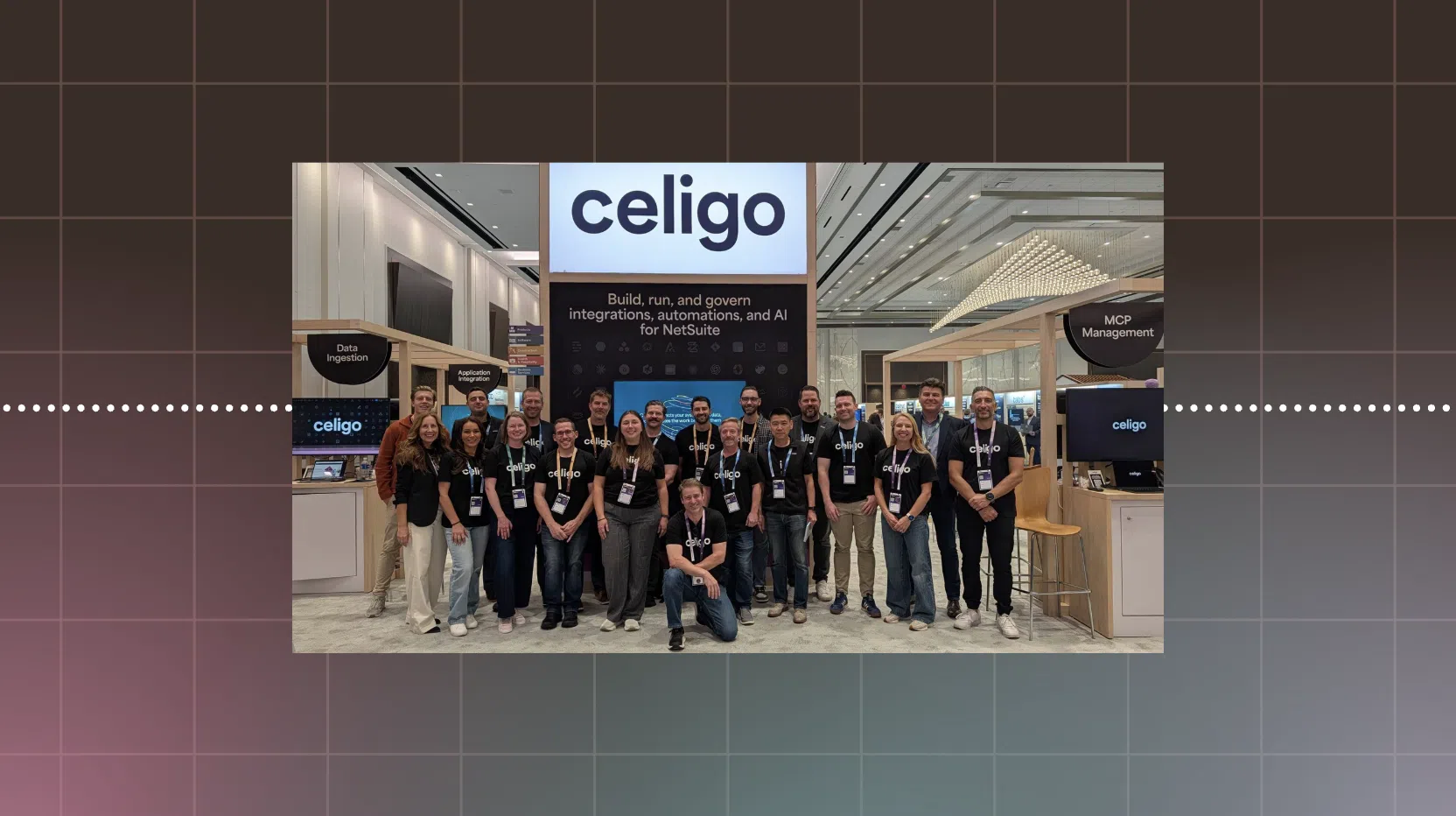
At SuiteWorld 2026, we had plenty of the conversations we expected. NetSuite users told us about familiar integration and connectivity challenges: keeping NetSuite in sync with CRM, ecommerce, warehouse, HR, and finance apps, replacing brittle point-to-point connections, and getting clean data flowing across the business.
What surprised us was how often those conversations turned to AI governance.
IT and security leaders told us they’re discovering how much AI their employees already use. People across the business are working in Claude, ChatGPT, and other AI tools, and connecting them to vendor-native MCP servers without IT’s knowledge. Those servers are often overpermissioned by default and offer limited visibility. An AI agent can end up with broad access to orders, customers, and financials that nobody approved, and IT teams are left combing through logs to work out who connected what and what the agent touched.
These leaders still want AI working across their entire stack. But before anything goes into production, they want to decide exactly what an AI agent can see and do, starting with read-only access. Until their CISOs have that control, AI projects are stalling.
The other surprise was how much interest there was in extending the Celigo platform beyond the UI, so teams can build and manage integrations through natural language instead of clicks or code.
Here’s what we heard.
Why are teams re-evaluating their AI strategy?
Governance concerns are forcing a reset. Teams have realized that vendor-native MCP servers aren’t built for their specific needs, and their security teams won’t sign off until they have full control over what an AI agent can see and do.
Here’s why that matters. Connecting an LLM to NetSuite and the apps around it means connecting it to orders, customers, financials, and inventory. A vendor-native MCP server exposes whatever the vendor decided to expose. That works for a demo. It doesn’t work when the CISO asks who can access what, which actions are allowed, and how every call is logged.
Three gaps came up repeatedly:
- No fine-grained scoping. Teams often want read-only access, or access limited to specific records and objects, and native servers don’t offer that level of control.
- No single point of governance. Every vendor ships its own MCP server with its own permissions model, so security has nothing consistent to review.
- No path to approval. The CISO’s office requires complete control before an AI project moves forward. Without it, projects sit in review.
Attendees didn’t describe this as a technical inconvenience. They described AI projects that were approved in principle and then delayed for months because nobody could answer the security team’s questions.
What is the best way to govern AI access across your applications?
These conversations reinforced why we built governed AI access into the Celigo platform. With Celigo, you get:
- Fine-grained control: MCP Management lets you decide exactly what an agent can see and do in every connected app, down to read-only access on specific records
- One point of review: a single permissions and logging model for every AI workflow, instead of one per vendor
- A faster path to approval: the controls and audit trail your CISO needs to sign off, so AI projects move out of review and into production
How are teams extending the Celigo platform beyond the UI?
Outside of governance, the other topic on everyone’s mind was how to get more out of the Celigo platform. Natural language is quickly becoming the fastest way to build and manage integrations between NetSuite and the rest of the stack.
That was the focus of my session, Beyond the UI: Using AI to Build, Run, and Govern NetSuite Integrations and Automations with Celigo. It was standing room only, and it clearly resonated.

We walked through Celigo’s new headless interfaces, the CLI and Platform MCP, along with Ora. Together they let humans and agents build, maintain, and govern integrations and automations through conversation instead of a traditional UI or code. The demos covered real integration work:
- Standing up data pipelines
- Handling EDI
- Orchestrating agentic workflows
The question we heard most afterward wasn’t whether to use these interfaces, but which one fits. New Celigo users and seasoned power users need different starting points, and the answer depends on both experience level and use case. Either way, the goal is the same: build, run, and govern every automation on a single platform using natural language.
Take your next step
The SuiteWorld community is ready to move on AI, but not at the expense of control. Organizations want to govern AI across their whole application ecosystem before they scale it, and they want to build and run integrations the way they increasingly work: through conversation. That’s the direction we’re building toward, and SuiteWorld confirmed we’re building in the right place.
See how MCP Management gives your security team control with a product tour.