NetSuite EDI Integration for EDIFACT: Modernize Global B2B Transactions
 Updated Jan 27, 2026

For companies running NetSuite and trading with European or international partners, integrating EDIFACT-based EDI can be a significant challenge. Traditional EDI solutions are often complex, costly, and lack visibility, especially when layered on top of NetSuite.
Modern NetSuite EDI integration eliminates these roadblocks by automating the exchange of critical B2B documents (such as purchase orders, invoices, shipment notices, and more) without relying on manual entry, legacy systems, or disconnected middleware.
Watch the demo
Here, we’ll explore how EDI integration with NetSuite simplifies EDIFACT compliance, streamlines B2B operations, and prepares your business for growth in a global supply chain.
Automate EDIFACT EDI operations in NetSuite
Manually processing EDIFACT documents often results in processing delays, missing data, and SLA violations. Each inbound order or outbound invoice becomes a potential failure point requiring IT intervention.
Automating EDIFACT operations in NetSuite reduces these friction points and provides a stable, scalable integration foundation.
Key capabilities include:
- Automated conversion of inbound EDIFACT into NetSuite-native records
Incoming ORDERS documents are parsed and translated directly into Sales Orders—no CSV imports or third-party transformation tools required. - Scheduled generation of outbound EDIFACT documents
Based on NetSuite data and configurable criteria, the system schedules the generation of outbound documents like INVOIC, DESADV, and ORDRSP—fully formatted to meet each trading partner’s compliance requirements. - Partner-specific transformation and validation logic
Apply conditional logic, field-level mapping, and mandatory segment enforcement based on each partner’s specifications to reduce rejections and chargebacks. - Built-in error handling and orchestration tools
Exception handling is embedded in the flows, allowing for automated retries, conditional logic paths, and alerting through email, or other systems that can be integrated—without requiring support tickets. - Secure EDI transmission via AS2, FTP/SFTP, FTPS, or VAN
All transport options meet industry-standard compliance requirements, ensuring safe and timely delivery of EDI documents across supplier ecosystems.
Whether you’re transacting with Sephora UK, AAFES, or any EDIFACT-based partner, automation reduces the IT burden and improves operational agility.
Reusable EDI profiles for scalable trading partner integration
Integrating with one trading partner is challenging enough. Doing it for dozens (each with different file formats, schedules, and data rules) can overwhelm internal teams.
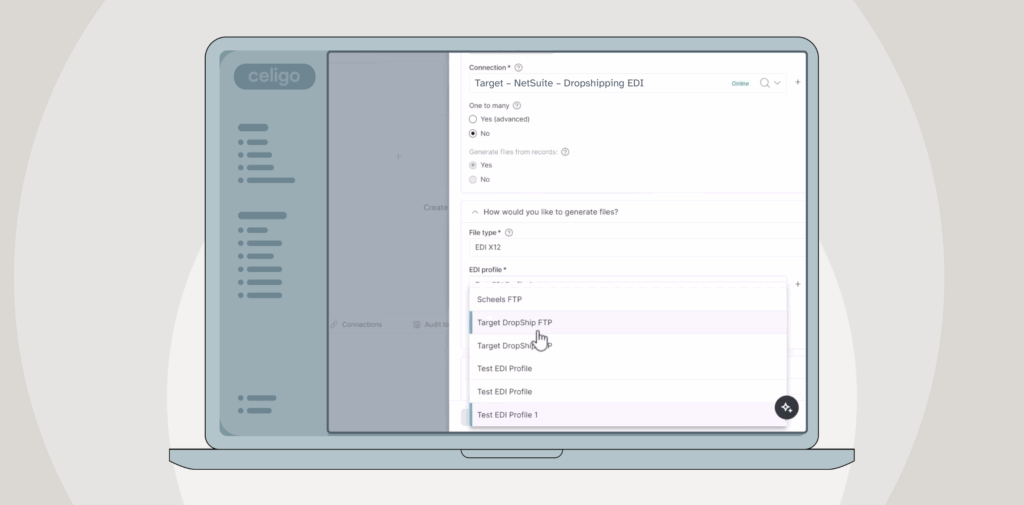
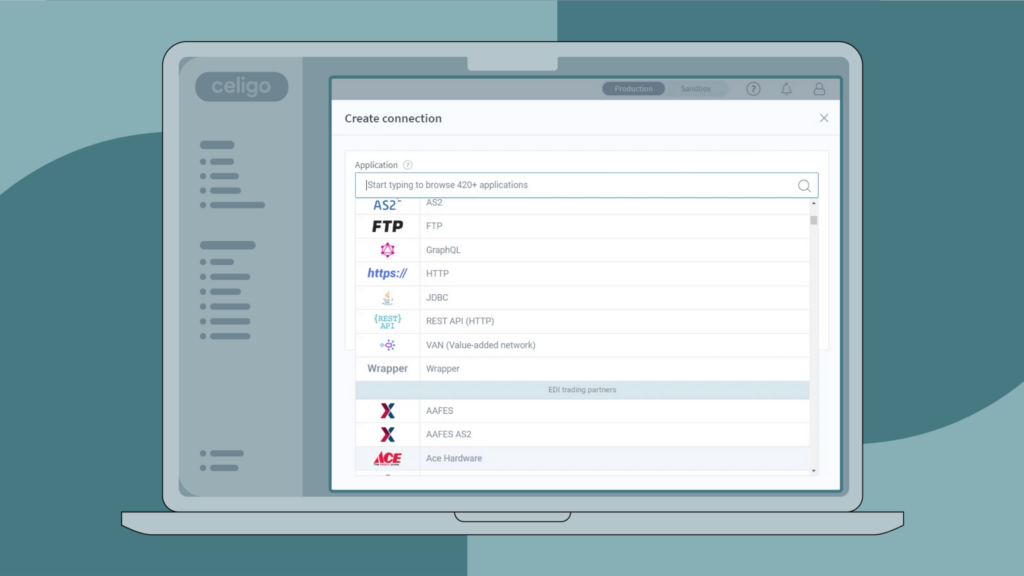
Celigo solves this with prebuilt trading partner connectors, each containing centralized EDI profiles and documents tailored to specific partner requirements.
Each profile includes connection settings, control segments, document mappings, and transformation logic, all reusable across multiple flows to eliminate redundant setup.
This approach lets you:
- Accelerate new trading partner implementation
- Customize partner profiles as needed
- Reduce compliance issues through centralized validation and mappings
- Standardize processing while maintaining flexibility
- Scale integrations without rewriting flows
Each trading partner profile includes:
- Communication method (AS2, FTP, SFTP, VAN) and endpoint credentials
- Supported flows (ORDERS, ORDRSP, INVOIC, DESADV, ORDCHG, etc.)
- UNB/UNG segments and control number handling
- Partner-specific mapping rules and validations
Onboarding a new partner? Start with a prebuilt trading partner connector, tweak configurations, and activate the flow. What used to take weeks now takes hours.
Prebuilt EDI templates for NetSuite
Implementing EDIFACT EDI from scratch is time-consuming and risk-prone.
Celigo simplifies this process with prebuilt templates designed specifically for NetSuite.
Supported EDIFACT transactions:
- ORDERS (Inbound): Create NetSuite Sales Orders from EDI order messages
- ORDCHG (Inbound): Update Sales Orders based on partner change requests
- ORDRSP (Outbound): Send order acknowledgments to trading partners
- DESADV (Outbound): Generate dispatch advice from Item Fulfillments
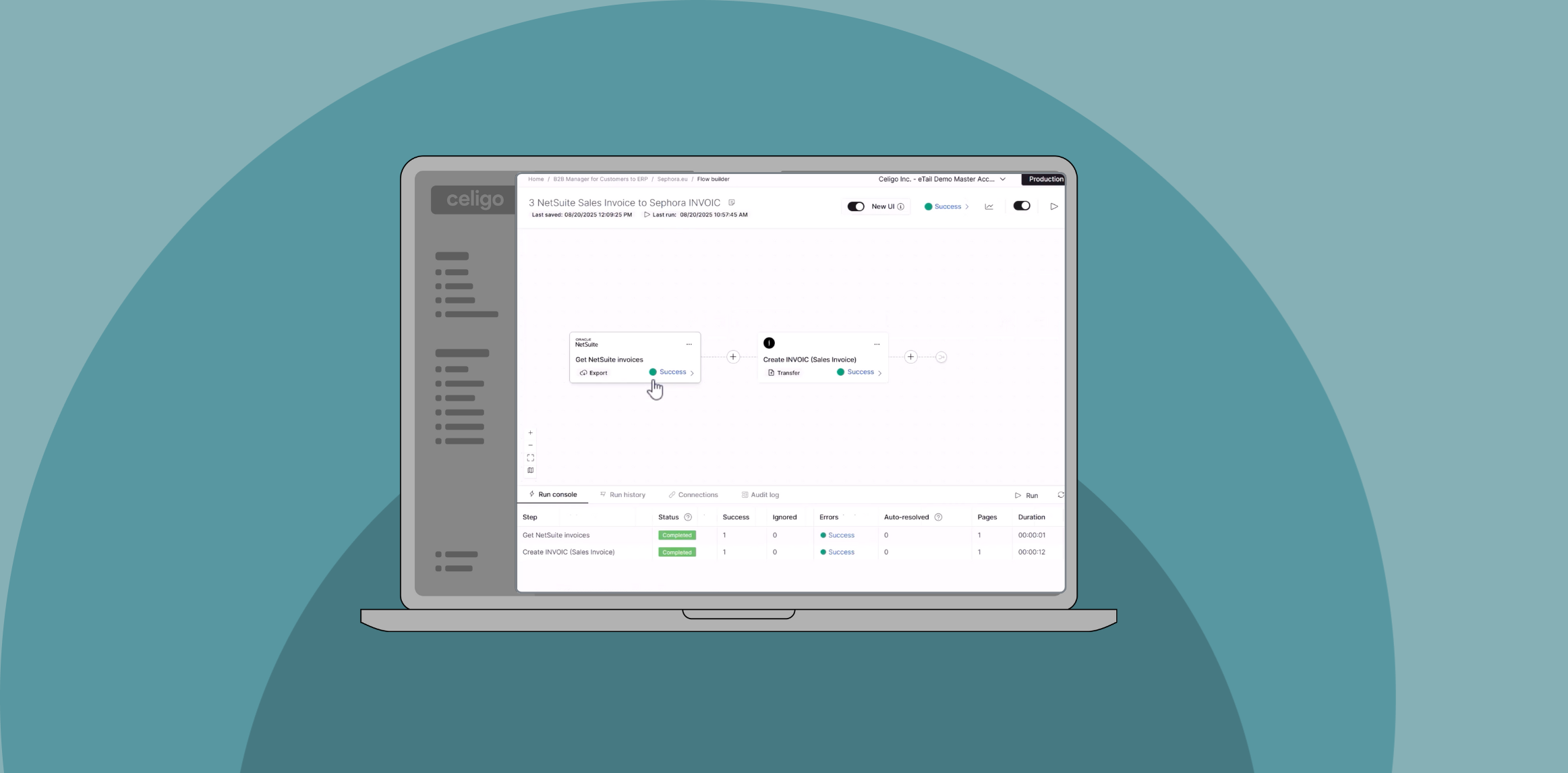
- INVOIC (Outbound): Create EDIFACT invoices from NetSuite Sales Invoices
- CONTRL (Outbound): Send functional acknowledgments for received documents
Each template includes:
- Pre-mapped fields for EDIFACT-to-NetSuite compatibility
- Built-in transformation logic (EDIFACT ↔ JSON)
- Error-handling paths and logging
- Out-of-the-box EDIFACT compliance
These templates can be extended to meet specific partner needs, creating a repeatable model for onboarding and scaling.
→Learn more about the EDIFACT Order-to-Cash template
Real-time visibility with the EDI dashboard
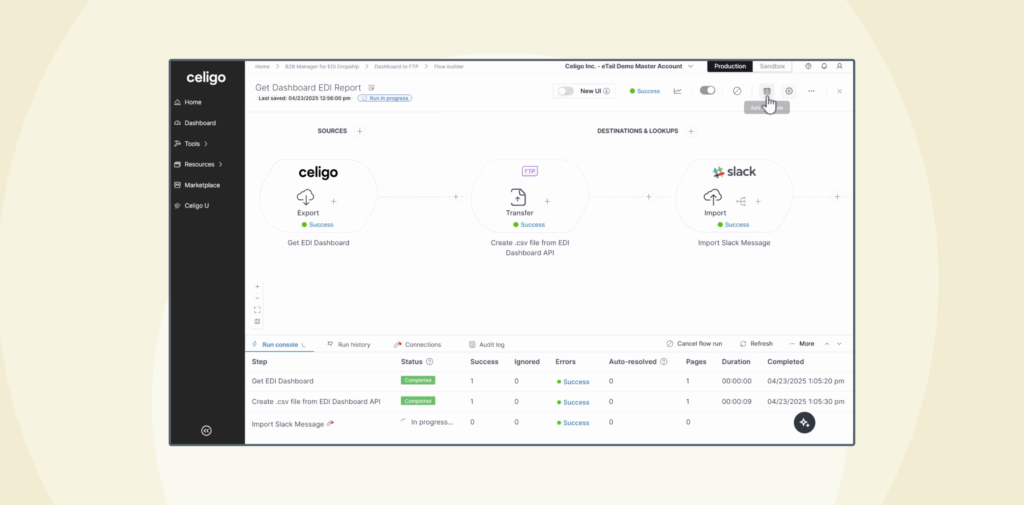
Celigo offers a centralized EDI Dashboard for real-time operational monitoring across all NetSuite EDI flows.
With full transparency into every transaction, teams can:
- Track document status and timestamps end-to-end
- View document-level acknowledgments (e.g., CONTRL)
- Inspect raw EDIFACT, translated JSON, and NetSuite records
- Trigger alerts via API, webhook, Slack, or other tools
This dashboard isn’t just for IT.
- Ops teams track fulfillment issues
- Finance can confirm invoice delivery and acknowledgment
- Customer service can respond to inquiries with full EDI history
Benefits:
- Resolve issues before they escalate
- Prevent SLA violations and chargebacks
- Reduce internal escalations and troubleshooting
- Build confidence in your EDI infrastructure
One platform for all workflows
Celigo delivers a unified integration platform that supports both EDI-based and API-based B2B workflows, as well as broader enterprise application integrations.
With built-in tools for AI-driven error management, role-based access, and centralized control, Celigo helps IT teams:
- Consolidate all B2B and app-to-app workflows
- Accelerate trading partner onboarding
- Stay in control of their EDI processes
- Eliminate reliance on custom code and external vendors
- Build a future-ready integration strategy
EDIFACT EDI doesn’t need to be a black box
If your current EDI workflows are slowing you down, it’s time to move from outsourced, black-box solutions to a fully integrated, scalable approach that gives your team control, agility, and speed.
Ready to eliminate EDI silos and take complete control of your B2B workflows?
Schedule a personalized demo to see how self-service EDI integration can streamline operations, reduce costs, and scale with your business.
Integration insights
Expand your knowledge on all things integration and automation. Discover expert guidance, tips, and best practices with these resources.