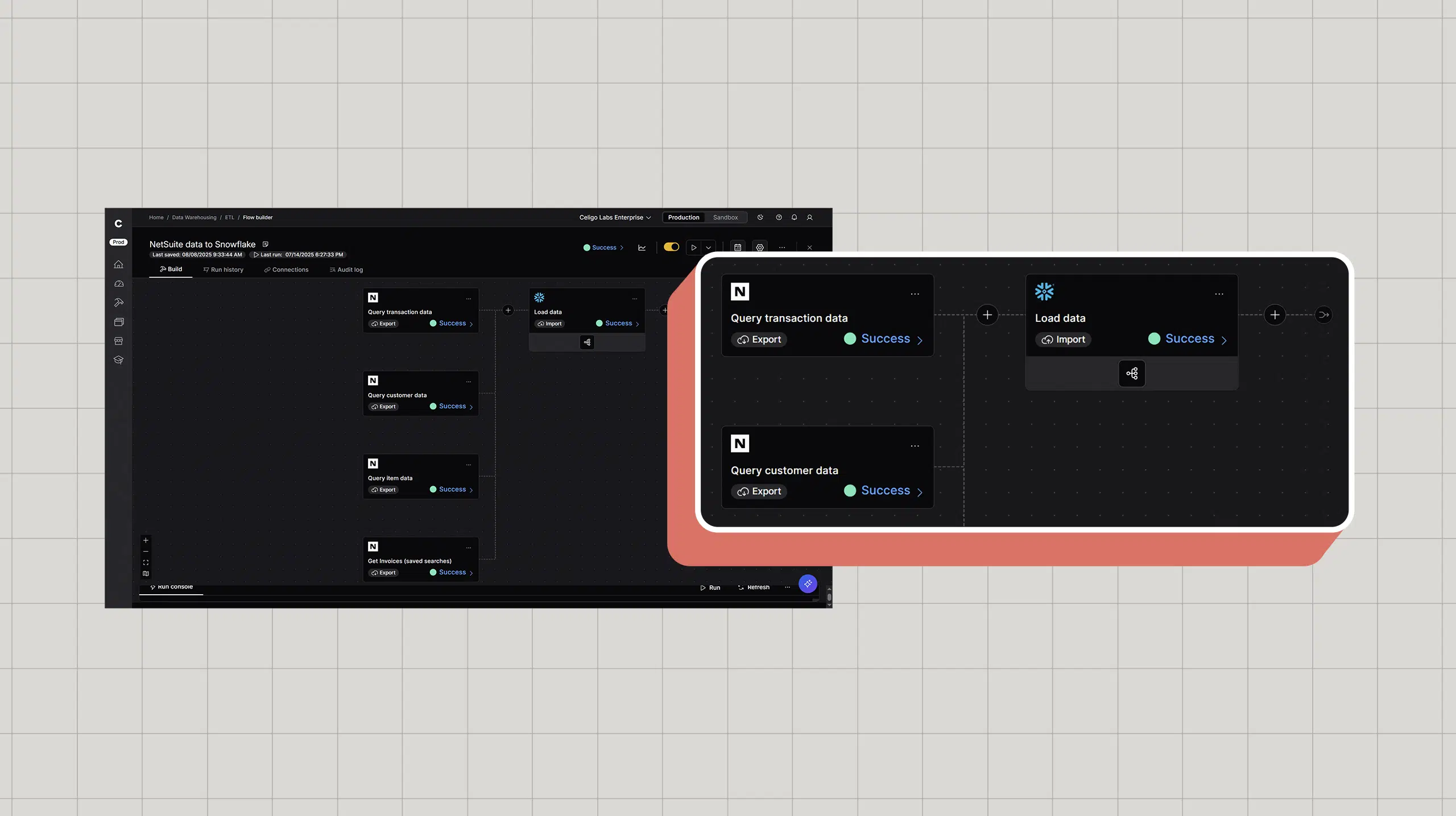
Best Boomi alternatives for iPaaS [2026]
 Updated Jan 16, 2026


Boomi is one of the earliest iPaaS platforms and has built a strong presence over the years. As integration has become more central to business operations, many buyers now look beyond basic connectivity and legacy operating models. The focus has shifted to platforms that enable broader ownership across teams, reduce long-term maintenance burden, and deliver compounding value as integration footprints scale.
This guide covers the leading Boomi alternatives for teams considering making a move. The goal is to help IT leaders and integration owners understand the trade-offs and choose a platform that aligns with their current needs and long-term plans.
Best Boomi alternatives shortlist
- Celigo — Best for teams that want shared ownership with IT guardrails, scalability, and lower TCO
- Workato — Good for teams focused on automating tasks across business users
- MuleSoft — Good for large enterprises with strong developer teams and API-first needs
- Jitterbit — Good for hybrid setups that include on-premise systems
- SnapLogic — Good for data pipelines and analytics-driven integrations
- Informatica — Good for data-heavy environments and enterprise data governance
- Tray.ai — Good for building custom workflows when flexibility matters more than speed
- n8n – Good for developer-led, open-source workflow automation
- Zapier — Good for simple, lightweight automations between SaaS tools
Why teams look beyond Boomi
Boomi has long been recognized as one of the pioneers in the iPaaS market, helping organizations connect cloud and on-premise systems at scale. It has been widely adopted across industries and is often seen as a popular choice for IT-led integration teams that value breadth of connectivity and centralized control.
However, in today’s competitive environments, some organizations find that Boomi’s legacy architecture can feel heavier than needed, slowing time to value. Moreover, its private equity acquisition and leadership transitions have led some buyers to question shifts in product focus and customer experience.
Below are the other main reasons teams may consider alternatives to Boomi.
- Legacy design and complexity: Despite minor improvements, Boomi still reflects older architecture. This often results in a clunky experience, and building and maintaining integrations requires more effort.
- Reliance on specialized skills: Teams often need prior experience to use Boomi effectively. This creates bottlenecks and business risk with high dependency when integrations live in the mind of a single resource.
- Disjointed product experience: Because Boomi has grown through acquisitions, much of the roadmap focuses on integrating these acquisitions. Some customers feel this limits the pace of real innovation, despite marketing that suggests otherwise
- Unexpected costs: Customers frequently mention surprise renewals, overages, and rigid contracts that make costs harder to predict over time.
- Support experience: This has become a major concern with many teams reporting that onboarding and support quality depend heavily on contract size, with smaller customers receiving slower or more limited support.
The technical floor of Boomi is way higher than what we’d like it to be. We’d like to hand this over to SalesOps so they are able to go in and train on how to manage the smaller things. We can help from an IT standpoint on the more technical things. But with Boomi, they can’t do anything. And I don’t want to be the main person doing this all the time.
– Information Technology Manager, $300M home automation systems company
9 best alternatives to Boomi
| Platform | Best For | Best Use Cases | Key Differentiator |
|---|---|---|---|
| Celigo | Enterprise organizations and fast-growing mid-market companies that need scalable integration and automation without heavy custom development | ERP–CRM syncs, Order-to-cash, Quote-to-cash, Procure-to-pay, EDI, ITSM, API management, ecommerce fulfillment, HR-to-IT workflows, and other cross-functional automation use cases | AI-assisted workflows enable IT and non-IT, automatically resolves 95% of errors at scale, unified platform (App Integration, APIM, EDI) |
| Workato | Business and IT users focused on task automation | Sales, marketing, HR, and finance workflow automation | Low-code/no-code “recipe”, huge connector library, AI @Work |
| MuleSoft (acquired by Salesforce) | Large enterprise IT teams | API-led integration, custom system connectivity | Deep API management and governance for complex environments |
| Jitterbit | Mid-market to enterprise teams | Cloud and on-prem integrations | Flexible support for hybrid and legacy systems |
| SnapLogic | Data and analytics teams | Cloud migration, analytics pipelines | Unified tool, ease of use for citizen Integrators, AI-assisted integration builder |
| Informatica (acquired by Salesforce) | Enterprises prioritizing governance and data quality | Data warehouse modernization, MDM | Comprehensive data management suite with metadata, lineage tracking, AI-powered governance (CLAIRE) |
| Tray.ai | RevOps and IT teams automating workflows | Marketing ops, cross-app automation, custom API-driven workflows | Low-code visual builder balancing business usability with developer control |
| n8n | Developer-led and technical teams | Self-hosted, point-to-point workflow automation | Open-source and self-hosted platform for full customization and data control |
| Zapier | SMBs and small teams | Quick SaaS point-to-point automations | No-code automation with 8,000+ prebuilt app connectors for fast setup |
Here is a closer look at the 9 best alternatives to Boomi.
Celigo: Best overall alternative to Boomi
Overview
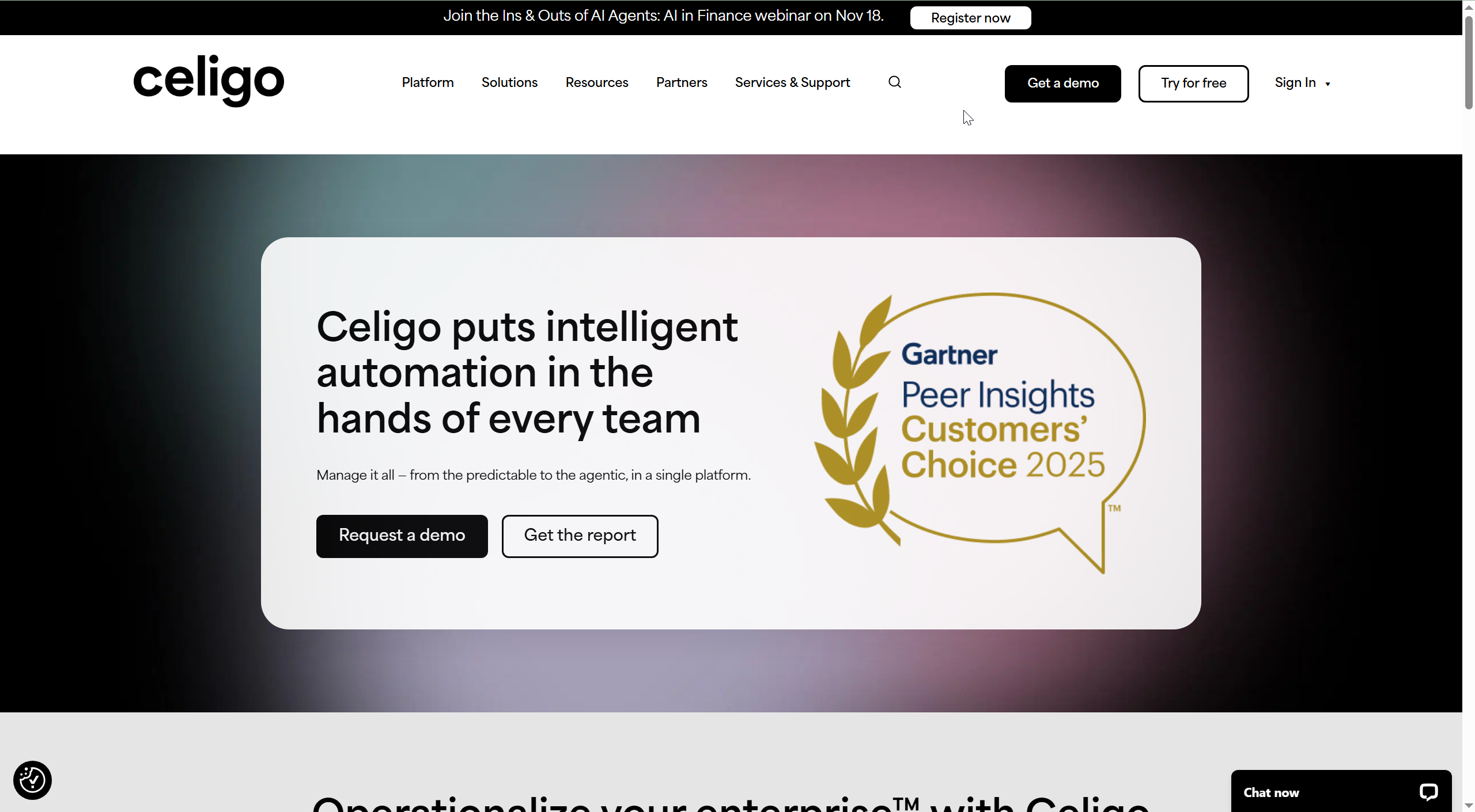
Celigo is an intelligent automation and integration platform designed for growing and enterprise companies with built-in AI support. The platform supports everything from predictable workflows to fully agentic automations.
As an alternative to Boomi, Celigo is often one of the first names that come up when looking for a more modern, intuitive, and scalable iPaaS. Over the years, Celigo has replaced Boomi in many organizations, largely driven by its support for day-to-day integration needs.
Key Capabilities
- Supports iPaaS, API, EDI, and data ingestion
- Low-code/no-code interface with a robust foundation underneath
- Endpoint-based pricing, no surprises
- Ideal for fully automating business processes for fast-growing companies to enterprise-grade
Pros
- Build integrations faster – Celigo’s AI-assisted UI, reusable components, and 1000+ prebuilt integrations let teams get work done without starting from scratch or requiring dependency on specialists.
- Scale to complex use cases – Behind the simple interface, Celigo supports high-volume, multi-step, and business-critical integrations, without the legacy architecture that often adds friction as complexity grows.
- Make quick changes – With Celigo, teams can own integrations themselves with IT guardrails instead of logging tickets, waiting on IT, retesting, and redeploying. Small changes stay small.
- Ongoing maintenance – 95% of errors are auto-resolved with built-in, AI-powered error handling, reducing the need to build custom error frameworks or pull IT into every fix.
- Customer-centric partner – Celigo is consistently rated highly by customers, including being ranked #1 on G2 for multiple consecutive quarters and named a 2025 Gartner® Peer Insights™ Customers’ Choice for iPaaS.
- Predictable pricing – Celigo’s pricing is transparent and easier to plan for, without overages and renewal surprises becoming part of day-to-day decision making
Cons
- No support for a fully open-source or self-hosted model
- Not a white-label embedded iPaaS. Product teams needing fully embedded branding may prefer purpose-built white-label tools.
Customer rating
- G2: 4.7
Workato
Workato is a cloud-based iPaaS with a low-code/no-code interface. It began as a task automation platform, which later evolved into an Integration Platform as a Service (iPaaS).
As an alternative to Boomi, Workato puts more emphasis on an intuitive and approachable platform for business users with a low-code builder, recipe-based approach, and AI-powered automation.
Key Capabilities
- Supports iPaaS, API, EDI (through Orderful partnership), and embedded
- Low-code/no-code “recipe” builder for automating workflows
- Task-based and recipe-based pricing
- Ideal for marketing and sales automations
Pros
- Modern UI, easy for business users
- Broad set of prebuilt connectors and recipes
- Fully cloud native
Cons
- Beyond simple use cases requires ongoing IT support
- Struggles with high-volume scenarios, costs can spike too
- Limited for deep ERP or legacy use cases
- EDI is not native, Orderful partnership adds complexity
Customer rating
- G2: 4.7
MuleSoft (acquired by Salesforce)
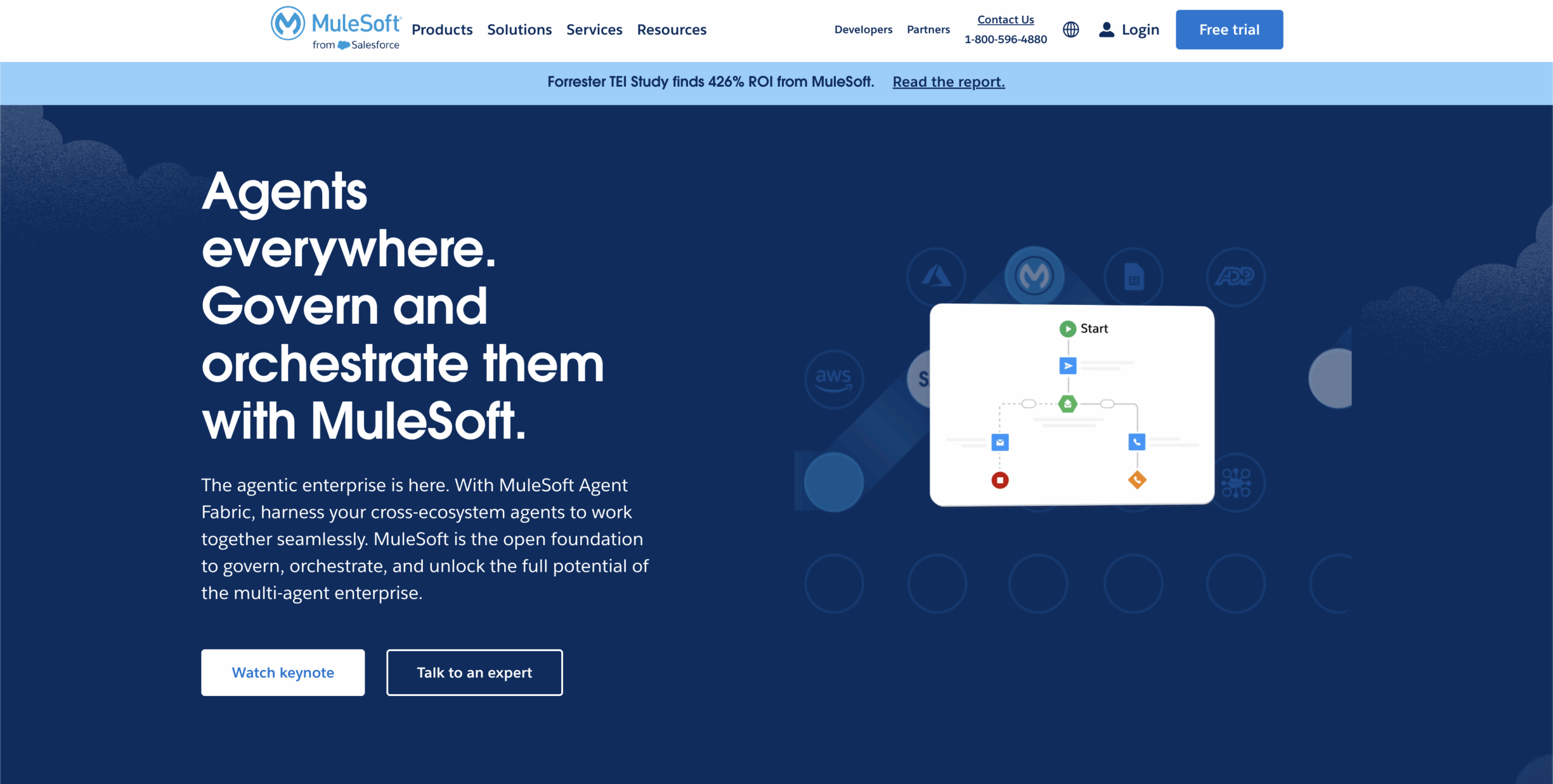
MuleSoft is an enterprise integration platform best known for its API-led approach. It’s designed mainly for large organizations with dedicated development teams that need to build and manage complex, custom integrations at scale.
Compared to Boomi, MuleSoft is better suited for deeper API management and more advanced development needs. It’s a good fit for companies that have grown in size and have dedicated integration specialists to build and maintain custom integrations across multiple teams and regions.
Key capabilities
- API-led architecture with system, process, and experience layers
- Anypoint Code Builder for development, Exchange for shared assets
- Supports RPA, Composer, and B2B/EDI
- Consumption-based pricing by flows, API calls, messages
- Suitable for API-centric integration needs in multi-billion dollar orgs
Pros
- API-led connectivity
- Advanced data transformation with proprietary language DataWeave
- Highly customizable platform using Java or XML
- Deep Salesforce integration
Cons:
- Risk of success unless staffed with a team of experienced developers
- Higher build and maintenance effort compared to modern iPaaS
- Pricing with multiple consumption components makes it hard to predict
- Customer support is slow
Customer rating
- G2: 4.5
Jitterbit
Jitterbit is an iPaaS that specializes in API integration and automation through its Harmony platform. Originally an on-prem solution, they evolved to address the need for integrating both on-premise systems and cloud-based solutions.
As an alternative to Boomi, Jitterbit offers a lighter-weight integration platform that emphasises on cloud and on-prem deployments.
Key Capabilities
- iPaaS, API, and EDI integration platform
- Drag-and-drop workflow design
- Connection-based pricing model
- Suitable for API and data migration use cases
Pros
- Built for citizen integrators and developers
- Supports cloud and hybrid deployment
- Prebuilt templates
- Fast deployment
Cons
- UI and setup can feel dated
- Connector quality can vary, especially for ERP use cases
- Reliability varies in large-scale workloads
- Lacks any error handling beyond alerts
Customer rating
- G2: 4.5
Snaplogic
SnapLogic is an integration platform built mainly for data and analytics teams. It’s designed to process data and is commonly used in environments where data movement, transformation, and analytics pipelines are a priority.
As an alternative to Boomi, SnapLogic leans more toward data-centric integration. It uses a visual pipeline-based approach, but most implementations are still led by technical users with experience in data integration.
Key capabilities:
- Supports application, data, and API integration
- Low-code visual designer supporting batch, streaming, and real-time data flows
- Prebuilt “Snaps” for major enterprise and cloud applications
- Pricing structure – business/enterprise bundles
Pros:
- Strong support for data ingestion and transformation
- Broad connector coverage
- Low-code visual builder
Cons:
- Complex for small teams and non-technical users
- Performance issues when dealing with high volume
- Better fit for data pipelines than application integrations
Customer rating
- G2: 4.3
Informatica (acquired by Salesforce)
Informatica is primarily a data integration & data management solution, acquired by Salesforce in 2025, now owned by the same parent company as MuleSoft.
As an alternative to Boomi, Informatica is much more data-focused. It’s designed less around day-to-day application workflows and more around moving, cleaning, and governing data at scale.
Key capabilities:
- Intelligent Data Management Cloud (IDMC) for data integration, MDM, cataloging, and quality
- AI engine (CLAIRE) for automated data mapping, lineage tracking, and metadata discovery
- Multi-cloud and hybrid deployment with connectors for on-prem and SaaS systems
- Usage pricing, based on Informatica Processing Units (IPUs)
Pros:
- Suitable for data-heavy and compliance-driven use cases
- Deep capabilities around data quality and governance
- Broad connector support for legacy systems
- Proven enterprise support
Cons:
- Legacy, complex architecture
- Steeper learning curve and higher implementation effort
- Overkill for pure application-integration use cases
- Pricing can be high for most organizations
Customer rating
- G2: 4.5
Tray.ai
Tray.ai is a cloud-native integration & automation platform (iPaaS/low-code) designed for integration specialists and business technologists. The platform focuses on no-/low-code workflow automation and app integration.
As an alternative to Boomi, Tray.ai offers a visual workflow builder for business users, but it still requires technical skills to design, test, and maintain workflows. Suited for departmental automations, GTM stack integrations, and SaaS-to-SaaS workflows with moderate complexity.
Key capabilities
- Supports visual builder, API connectivity, and embedded
- Low-code customization with optional JavaScript and API steps
- Tiered pricing with usage components: # of workspaces, # of tasks, # of API calls, various add-ons
- Suitable for business technologists, advanced functions need developer oversight
Pros
- Modern UI
- Cost-effective for lighter automation
- Prepackaged integrations and connectors
Cons
- Limited performance at a very high scale
- Requires technical expertise to manage effectively
- Not suitable for complex use cases
- Limited support for on-prem or legacy systems
Customer rating
- G2: 4.5
n8n
n8n is an open-source workflow automation platform. It enables users to connect applications and automate complex business processes using a visual, node-based interface. It serves organisations that need to build custom automations rapidly, integrate many apps, and keep control over hosting/data.
As an alternative to Boomi, n8n is a point-to-point tool but is designed for developers to build small, cost-efficient automations, rather than a full-featured enterprise platform.
Key capabilities
- Visual node-based workflow builder supporting hybrid code and no-code automation
- Prebuilt nodes for SaaS and system integrations
- Self-hosted and cloud deployment options
- Usage pricing, based on # of workflow executions, and hosting type
Pros
- Full control over data/infrastructure reduces vendor lock-in
- Flexible for custom workflows and smaller teams
- Cost-effective for smaller-scale use cases
- Built for developers, not business-friendly
Cons
- Lacks enterprise-grade features, SLAs, and mature connectors
- Developer-centric, high maintenance due to self-hosting
- Open source, lacks security
- Not suitable for high-volume
Customer rating
- G2: 4.8
Zapier
Zapier is a no-code automation tool built for individuals, small teams, and non-technical users. It focuses on simple automations between SaaS applications and is often used to replace manual, repetitive tasks.
As an alternative to Boomi, Zapier sits at the lighter end of the spectrum. It’s best suited for SMBs with simple integration needs, or for more mature organizations that use it alongside their main iPaaS to handle small, low-risk automations.
Key Capabilities
- No-code visual builder for creating automated workflows (“Zaps”)
- 8,000+ app connectors; task-based workflows
- Complementary services such as Tables, Interfaces for portals
- Pricing tiered, based on # of tasks, # of users and AI features as add-ons
Pros
- Broad app coverage
- Quick setup and time-to-value
- Easy to use for non-technical users
- Cost effective
Cons
- Limited scalability for mission-critical use cases
- Not suited for complex data transformations, APIM, and EDI needs
- Limited error handling and monitoring
- No support for on-prem or legacy systems
Customer rating
- G2: 4.5
How to choose the best Boomi alternative for your business
The right Boomi alternative depends on your integration strategy, your team’s skills, and how quickly your business needs to adapt. Some platforms prioritize API-led development, others focus on data integration or basic workflow automation.
Celigo stands out for IT and operations teams that need enterprise-grade integration power without Boomi-level complexity, admin overhead, or unpredictable costs. With a governed, low-code platform, prebuilt integrations, and centralized management, Celigo makes it easier to scale automation across ERP, CRM, finance, and ecommerce — while keeping total cost of ownership under control.
→ Book your demo to evaluate how Celigo solves for your use case.