 Salesforce
 MS Dynamics 365
 Oracle NetSuite
 SAP
SAP Walmart
 Amazon
 Shopify
 Snowflake
 Acumatica
Scaling marketplace WebOps with agentic automation

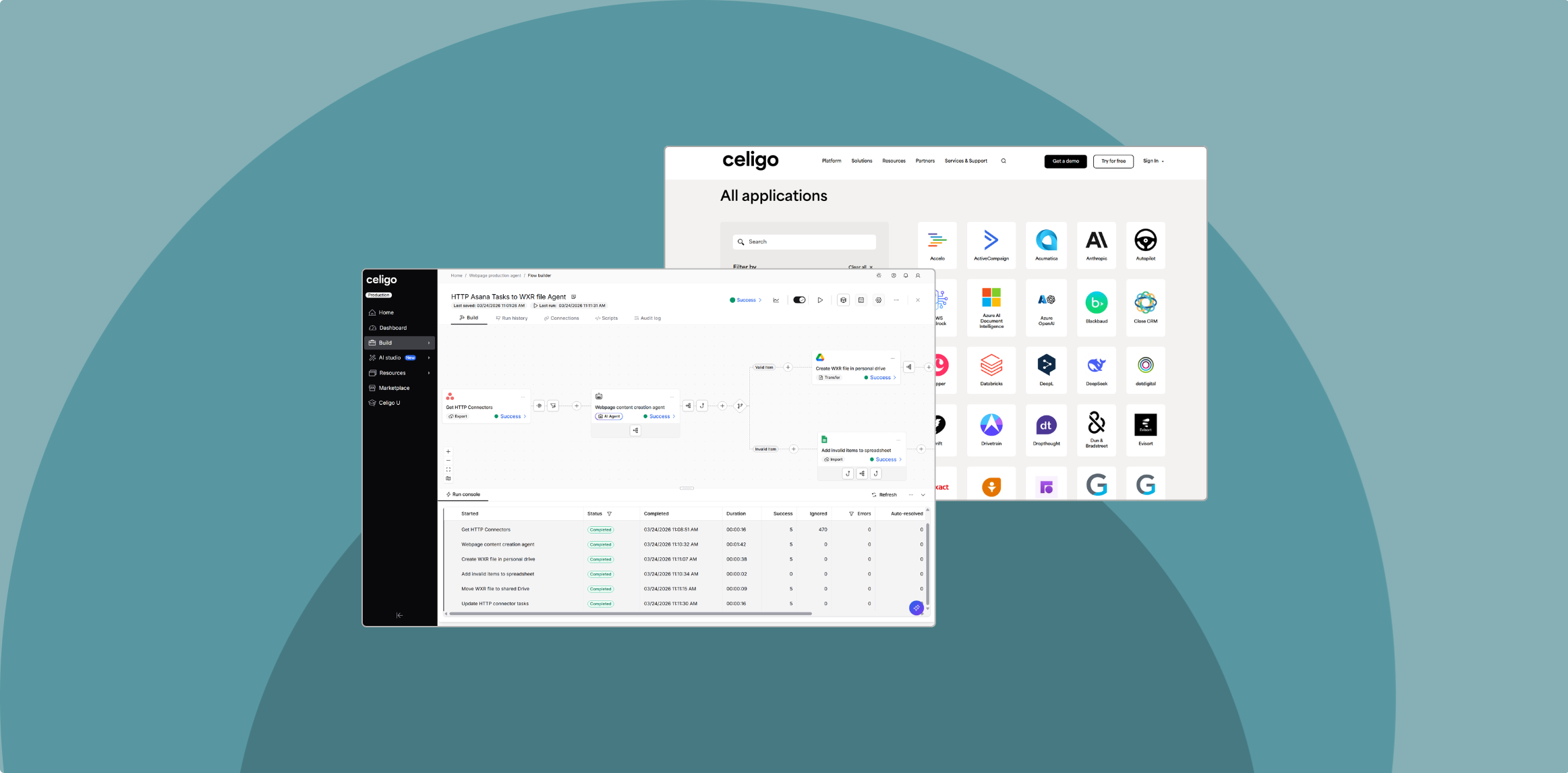
Celigo’s Integration Marketplace plays a critical role in the company’s go-to-market motion. During active deal cycles, prospects rely on the marketplace to verify whether Celigo supports their application ecosystem. The presence or absence of a connector can directly influence deal velocity and conversion outcomes.
Beyond sales enablement, the marketplace is also one of Celigo’s highest-traffic web properties and a key driver of demo requests and free trials. As a result, maintaining both the coverage and freshness of marketplace content is not just an operational priority. It has direct revenue implications.
The challenge: scaling with product velocity
The primary challenge stemmed from the increasing volume and speed of connector releases. Since the introduction of B2B Manager, connector output accelerated significantly across both trading partner connectors for EDI automation and HTTP connectors, for enterprise application integration and automation.
Publishing marketplace pages requires coordination across engineering, product, and marketing teams. To keep pace, many HTTP connectors were published as knowledge base (KB) links rather than fully developed marketplace pages. While this approach improved efficiency, it came at a cost:
- Reduced SEO value
- Less polished user experience
- Inconsistent marketplace presentation
With connector output having doubled, creating fully structured pages manually on a biweekly basis could not scale. It introduced delays between connector completion and marketplace visibility, consumed cross-functional bandwidth, and ultimately limited how quickly the marketplace could reflect new product capabilities.
However, with the introduction of Celigo’s Agent Builder, our team realized an opportunity to automate the creation of specialized content for these pages.
The goal was to remove this bottleneck while improving output quality. Specifically:
- Restore the SEO benefits of dedicated marketplace pages
- Reduce time to publish for new connectors
- Eliminate reliance on manual, cross-functional effort
- Achieve all of the above without increasing headcount
The solution: agentic automation
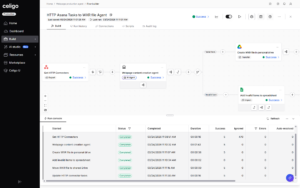
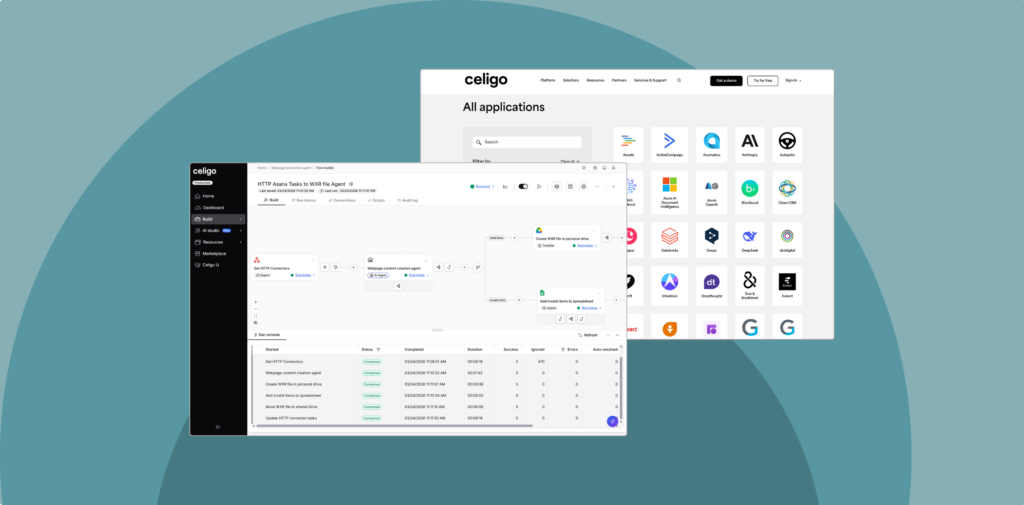
To address this, the team built an agentic automation with Agent Builder that combines retrieval, content generation, and operational execution into a single system.
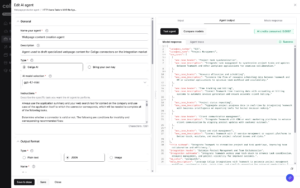
The agent operates across the full publication lifecycle, integrating with tools such as Asana, Jira, and WordPress.
Using a retrieval-augmented generation (RAG) approach, the agent pulls from multiple data sources, including:
- Jira issues for technical and release context
- Existing marketplace pages for structural patterns
- External web research for enrichment
From this, it generates fully structured marketplace content, including:
- Hero copy
- Meta descriptions
- Categorization and filters
- Six tailored use cases per connector
The agent also references Celigo’s branding guidelines to dynamically apply visual elements, such as selecting an appropriate brand color for each page.
Adding business context
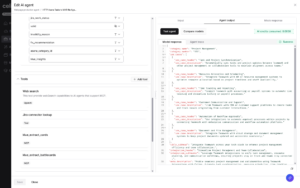
To further enhance decision-making, the workflow incorporates Klue win-loss intelligence. If a connector or a similar integration appears in competitive data, the agent flags it and writes a summary back to Asana. This provides additional visibility into the connector’s potential revenue impact.
Automated page creation
The system is designed to operate with minimal input. Starting with as little as a connector name in Asana, the agent:
- Uses its web search tool to learn more about the connector
- Classifies the connector
- Generates all required page content
- Maps categories to internal WordPress IDs
- Structures the output as a WXR (WordPress export) file
- Retrieves data on the Jira Issue engineering used to track development
- Updates the originating Asana task with results
Due to security constraints, direct POST requests to WordPress are not permitted. Instead, the workflow places the generated WXR file into Google Drive, where it can be downloaded and imported using the WordPress importer.
All pages are created as drafts, ensuring a human review step before publication.
Built-In quality assurance
[Spreadsheet with invalid connectors]
The flow also includes automated QA checks to maintain content integrity. The agent flags each connector, according to its name and proposed category for issues like:
- Typos or formatting issues in the name
- Company names outdated with current branding
- A connector that requires the addition of a new category for search
If issues are detected, the connector is routed to a spreadsheet with recommended fixes instead of being published. This ensures governance while preserving automation speed.
Measurable efficiency gains
The operational impact of this agentic automation is significant.
KB-linked connector pages, built manually, previously required about 20 hours per month on average. The specialized pages these replaced historically required about 80 hours per month.
With agentic automation, specialized HTTP pages now require just 30 to 60 minutes per month with most time spent on QA. This has been reduced to about 1 hour and the quality of the deliverable has drastically improved.
Prior to automation, maintaining dedicated connector pages required roughly 80 hours per month. Based on 2025 connector release volume, continuing that model alongside TP connectors would have required approximately 1,920 hours annually. This is equivalent to a full-time employee.
With this system, Celigo has:
- Recovered SEO value
- Improved content quality
- Scaled marketplace coverage in line with release velocity
- Avoided additional headcount
What made this agentic approach effective was the necessity to handle the variability in connector types and specialized content requirements. Each page required pulling details from the web, Jira, existing listings, and more, then shaping that into a consistent structure with unique content. Instead of relying on manual coordination or rigid templates, the agent interprets the available context and assembles a complete page while still following defined rules.
→ Get a demo to see how Celigo powers agentic workflows for WebOps by connecting AI to the systems that represent your business.