B2B Manager for EDI: Print retailer-compliant shipping labels
 Updated May 27, 2026

For teams managing business-to-business fulfillment, container shipping labels are not a minor operational detail. They are a compliance requirement that can directly affect shipment speed, warehouse efficiency, and trading partner performance.
When label generation depends on manual steps, disconnected tools, or rekeying shipment data outside the ERP, the process becomes slower and more error-prone. That creates avoidable risk in the warehouse and increases the chance of chargebacks, delays, or rejected shipments.
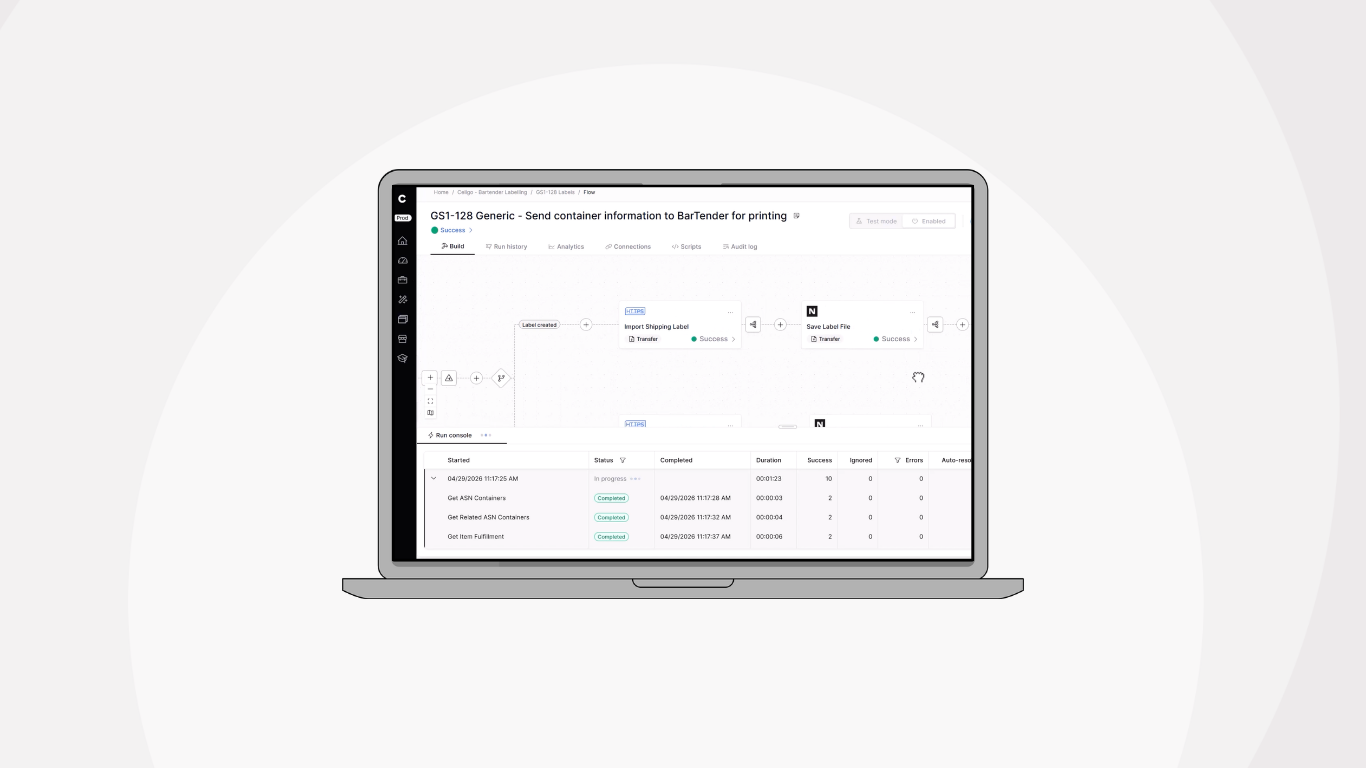
Celigo solves this by automating EDI shipping label generation directly in NetSuite as part of the wholesale fulfillment process.
Watch the quick demo
Remove manual steps from the shipping process
Warehouse efficiency depends on reducing the number of handoffs and manual tasks required to get an order out the door. Celigo enables teams to generate shipping labels directly inside NetSuite, so users do not need to leave the ERP, re-enter shipment data, or manage a separate label workflow outside the system of record.
That makes the process faster and more consistent while reducing the operational friction caused by disconnected steps.
For fulfillment teams handling repeatable retailer workflows, that consistency is a practical advantage.
Support retailer compliance more consistently
B2B shipping labels need to meet retailer-specific requirements. When that process is handled manually, the risk of formatting errors, omissions, or inconsistent output increases.
Celigo helps standardize label generation, enabling teams to produce compliant shipping labels as part of the fulfillment workflow. That reduces compliance risk and helps protect trading partner relationships by lowering the likelihood of shipment issues tied to incorrect labeling.
This is especially important for retailers with strict requirements, where errors can cause operational disruptions beyond the warehouse.
Reduce chargebacks, delays, and rejected shipments
Compliance issues in shipping do not stay isolated. They often surface later as chargebacks, delivery delays, or rejected shipments, resulting in additional costs and rework.
By automating shipping label generation in NetSuite, Celigo helps reduce manual errors that can trigger downstream problems. The result is a more reliable fulfillment process and fewer avoidable exceptions for operations teams to manage after the fact.
That matters both financially and operationally, especially when shipment volume increases.
Handle higher shipment volume without adding complexity
Processes that work at low volume often break down under scale if they depend on manual intervention. Celigo helps teams handle higher shipment volumes by making label generation part of the standard fulfillment workflow rather than a separate task. That allows warehouse operations to move faster without adding the same level of complexity, overhead, or process variance.
For growing wholesale operations, that is a more sustainable way to support scale.
A better way to run wholesale fulfillment
For teams managing wholesale operations, shipping labels affect speed, compliance, and cost. Celigo helps improve all three by automating label generation directly in NetSuite, reducing manual effort, and supporting a more consistent fulfillment process.
That gives warehouse, operations, and IT teams a more efficient way to manage retailer requirements while preparing for higher shipment volume and fewer avoidable issues.
→ Get a demo to see how Celigo automates label generation in NetSuite, so your team can meet retailer requirements, reduce fulfillment friction, and handle higher order volume with confidence.
Integration insights
Expand your knowledge on all things integration and automation. Discover expert guidance, tips, and best practices with these resources.