
Autonomy is earned, not granted: What VB Transform 2026 confirmed about enterprise AI

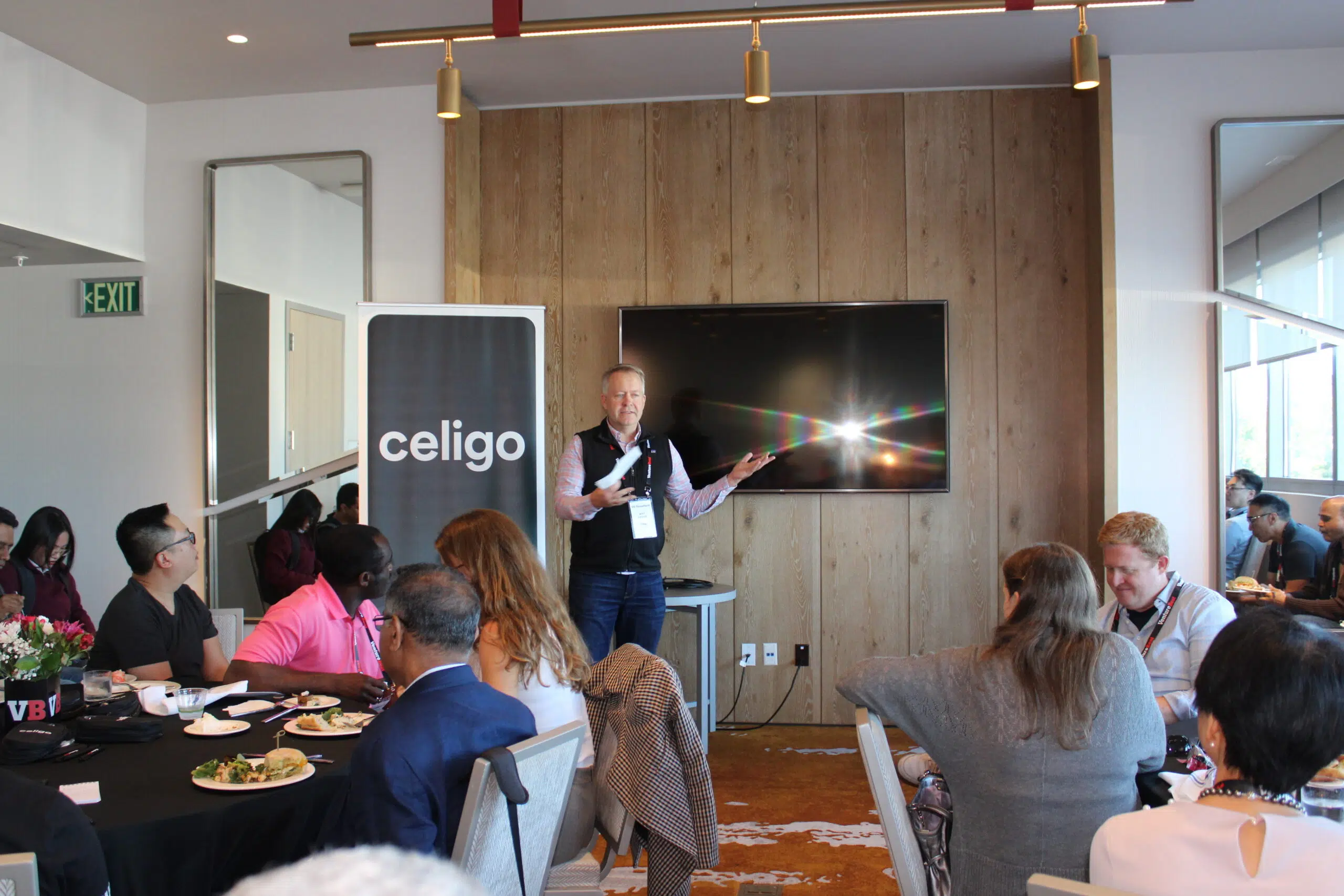
Every year, VentureBeat Transform brings together the people actually building AI inside large enterprises, and this year’s event in Menlo Park was the most practical yet. Less “what if,” more “here’s what broke, here’s what we rebuilt, and here’s what we’d do differently.”
I spent two days in sessions with teams from Intuit, Expedia, Target, Capital One, Instacart, Mastercard, Asana, and more. Celigo’s Chief Product Officer, Matt Graney, hosted a roundtable titled “Who’s liable when the agent gets it wrong? Building scalable AI with accountability.”
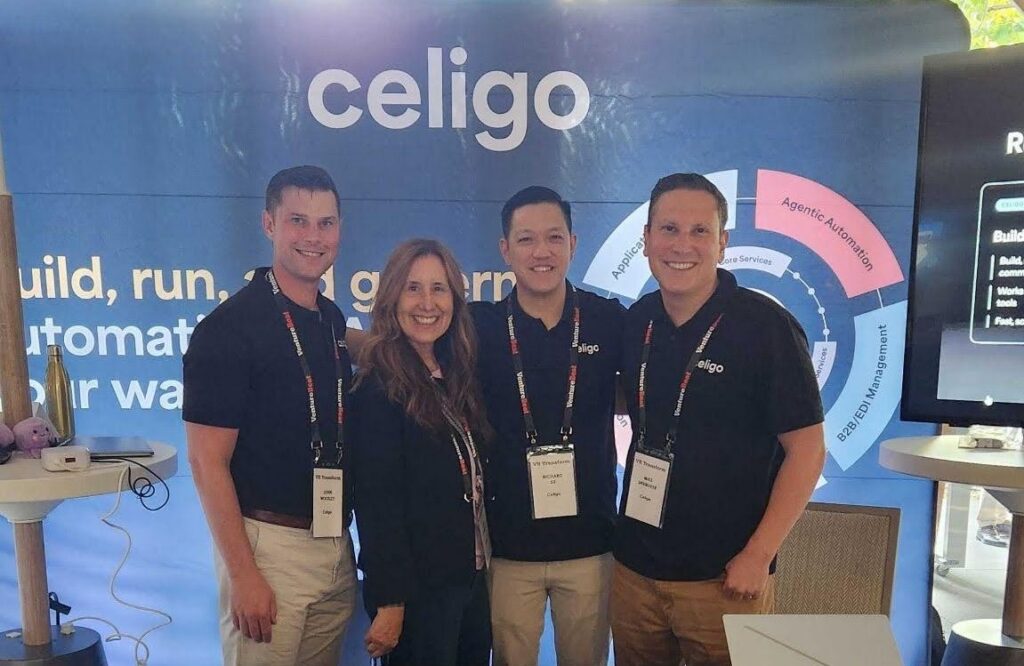
And here’s the honest headline: very little of it surprised us. The principles we’ve been building into the Celigo platform, deterministic execution first, bounded actions, governance as the enabler of autonomy rather than the enemy of it, are now the consensus position of the most sophisticated AI teams in the world.
Here are my 3 key takeaways:
- The enterprise AI conversation has shifted from “can agents do this?” to “can we trust, govern, and audit what they do?” Trust, not capability, is the blocker.
- Every serious builder at the event landed on the same pattern: narrowly scoped agents, deterministic execution wherever possible, and autonomy that gets earned over time.
- Individual productivity gains are everywhere. Organizational value is not. The teams closing that gap are redesigning workflows and data foundations, not just handing out AI licenses.
The trust gap is the real AI bottleneck
Matt opened his roundtable with a story about a Waymo. A friend set out from Redwood City to meet him at a World Cup match, and only discovered mid-ride that the vehicle wasn’t going to take the freeway. Eighty minutes of backroads later, he gave up. The agent did exactly what it was designed to do, within constraints the rider never knew existed. So who got it wrong?
That question, who is responsible when AI goes wrong, framed the entire hour.
One participant offered a reframe that stuck with the whole table. Forget “human in the loop.” Think “human in the lead.” In RACI terms, an agent can be Responsible, Consulted, or Informed. It can never be Accountable. Accountability stays with a person, full stop.
The group kept returning to the same conclusion: trust is the primary blocker today, not capability. The models can do far more than most organizations let them do, but evidence of harm drives conservative access controls, like the participant who described limiting agents to read-only access with human review on every output. Sensible, and also a ceiling on value.
Binary guardrails, the kind that shut down an entire flow when a trigger fires, were called out as fundamentally flawed. One builder shared that a voice AI system was capped at a 60% resolution rate purely because of guardrail brittleness. The emerging alternative doesn’t just detect a bad output, it remediates it at inference time, before it reaches the user.
The sharpest observation was about QA. Traditional quality assurance rests on what Matt called a Newtonian assumption: the same inputs produce the same outputs, so at some point you’re done.
With agentic systems, you’re never done. QA continues in production, permanently. Pair that with model lifetimes of 12 to 15 months and compressing, and the architectural implication is clear: modular pipelines with a routing layer, so a model change means updating one layer, not the whole system.
Matt closed one thread with the pattern we push hard at Celigo. If system A always feeds system B, don’t force the model to chain those calls every time. Wrap the sequence as one composite, governed, deterministic tool. The model gets fewer, more powerful tools to choose from, and you get a full audit trail.
What the AI builders have converged on
Across the main stage, companies in completely different industries described nearly identical lessons.
AI lessons from Intuit
Nhung Ho (VP of AI) told the most honest rebuild story of the event. A fleet of specialist agents passing natural language to each other degraded context with every handoff. An orchestration layer on top worked for three months, then fell over. So they scrapped it and rebuilt on a skills-and-tools architecture in roughly 60 days, and can now bring a human expert into an active agent conversation with full context preserved.
AI lessons from Expedia
Xavier Amatriain (Chief AI and Data Officer) made the boldest claim about guardrails: design out the need for them entirely. Their agent recommends and discusses, but a human must click to confirm any purchase. When the risky action structurally cannot happen without a person, you don’t need a brittle filter trying to catch it.
AI lessons from Target
Siobhan McFeeney (SVP of Technology) described an autonomy ladder that maps almost exactly to how we think about it at Celigo: observe, suggest, act within guardrails, then autonomy with oversight. Her line captured the whole event: autonomy is earned, not granted. Agents that drift get pulled from service.
The same physics showed up everywhere else.
- Asana’s CPO Arnab Bose argued that one-off chat interactions don’t compound without shared memory and codified workflows.
- Mastercard’s Greg Ulrich (Chief AI and Data Officer) laid out a trust framework for agentic commerce built on agent identity and tamper-proof records of original intent.
- Instacart’s CTO Anirban Kundu’s incident-response agent, trained on ten years of institutional knowledge, diagnosed a recent production incident before the human team did.
- And Capital One‘s Kel Vanee walked through a multi-agent architecture where a validation agent’s entire job is fact-checking the other agents against policy before anything reaches a customer.
The gap between individual speed and organizational value
Dr. Molly Sands of Atlassian’s Teamwork Lab put numbers on something many of us have felt: 89% of executives say AI is making individuals faster, but only 6% are confident they have clear examples of organization-wide AI ROI.
The teams that have cracked it share three things: structured context that agents and teammates can actually access, redesigned end-to-end workflows rather than automated tasks, and leaders who explicitly permit experimentation and failure.
Everyone moving faster in different directions doesn’t produce a faster organization. It produces collisions.
So where do you start?
It’s the question I hear most from Celigo customers, and my answer is a gate, not a brainstorm.
Map how work actually flows, every step, handoff, and queue. Find the breaks. Then classify each piece honestly: deterministic automation, agent, or human? Whatever you can do deterministically, you should. It’s faster, cheaper, and more accurate than a model call. Use AI only where judgment is genuinely required.
For the use cases that survive, ask whether the problem lives between systems, whether the volume is high, whether the same decisions recur, whether actions can be constrained to a known, auditable set, and whether the agent can start propose-only and safely earn autonomy over time.
The strongest agents described at Transform, and the strongest ones we run at Celigo, all follow that lifecycle. Trust compounds. So does autonomy.
Take your next step with Celigo.
Matt ended his roundtable where he began, with cars. A road where every vehicle is self-driving is probably safer, because the cars coordinate. Agents will likely get there too. The open questions are all about the road between here and there.
The distance between a personal AI habit and a governed enterprise agent is shorter than most teams think, but it closes only when the data is connected, the actions are bounded, and every decision is auditable. That connective layer is exactly what we build at Celigo.
If you have a use case you want to pressure-test, request a demo or reach out to me directly, and let’s figure out your next step together.