How Dynamics 365 partners accelerate integration delivery, improve margins for automation projects, and operationalize AI with Celigo
 Updated Mar 16, 2026


Dynamics 365 partners are being asked to do more than implement ERP.
Customers want end-to-end workflows that actually run — across CRMs, ecommerce, 3PLs, billing, data, finance, and AI workflows — without weeks of custom work or months of post-go-live support.
That creates a very real partner challenge:
- Implementations are speeding up, but integration expectations are rising
- Support demand expands after go-live
- Margins get squeezed when every new connection becomes bespoke
- Customer satisfaction depends on what happens after the “project” ends
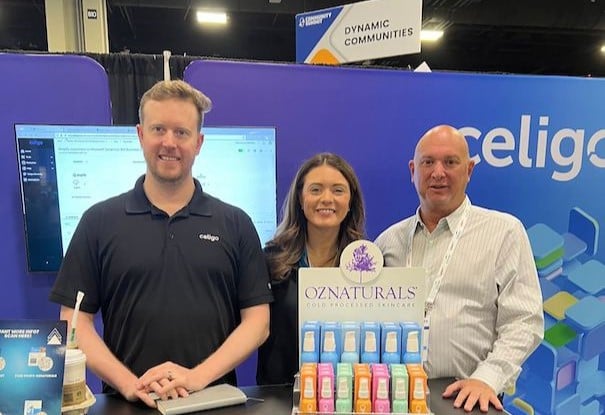
At Microsoft Directions North America 2026, Celigo is meeting with partners to discuss connecting Business Central and F&O, unifying enterprise workflows, and embedding governed AI into real business operations.
Thrasher: Schedule a meeting with Celigo at Directions NA 2026.
The integration reality: Dynamics doesn’t live alone
Microsoft offers powerful native tools like Power Platform and Azure Logic Apps, which are excellent for many use cases, particularly when customers are deeply invested in the Microsoft stack.
However, Dynamics 365 customers increasingly need to connect:
- Ecommerce platforms
- CRM systems
- 3PLs and supply chain partners
- Finance and billing platforms
- Data warehouses and reporting tools
As environments become more cross-platform and AI-driven, partners need scalable automation to bring their workflows together. If ecommerce, finance, CRM, and supply chain systems operate in silos, AI initiatives will struggle to move beyond pilots because the underlying data and processes are fragmented.
AI cannot operate effectively on inconsistent, delayed, or disconnected data. Without an automated, integration foundation, AI introduces risk instead of advantage. That’s why 90% of firms with at least one AI workflow fully in production are using an integration platform, according to upcoming research from MIT Technology Review and Celigo.
The partners who fix the automation foundation now will be the ones who lead the next wave of AI-driven growth inside the Microsoft ecosystem.
Use cases and limitations of Power Platform and Logic Apps
Microsoft provides powerful tools like Power Platform and Azure Logic Apps. For many Microsoft-centric use cases, they are a strong fit. But they also have limitations.
Power Platform is a strong fit for lightweight workflows and internal Microsoft-centric processes. But in complex, high-volume, or cross-application integration scenarios, partners may encounter:
- File size limitations
- Constraints around concurrent runs and API calls
- Challenges troubleshooting and resolving broken flows at scale
For Dynamics 365 customers running ecommerce, multi-system finance, or B2B integrations, partners often need a platform purpose-built for large-scale, cross-application automation.
Logic Apps offers deep extensibility and flexibility, especially for highly technical teams. However, some customers experience:
- A need for skilled technical resources to build and maintain flows
- Consumption-based pricing models that can be difficult to forecast as volumes grow
For mid-market and growth-focused Dynamics 365 customers, predictability and ease of management can become critical factors.
That’s where Celigo can complement the Microsoft ecosystem.
How Celigo’s intelligent automation platform helps Dynamics 365 partners integrate applications and operationalize AI
Dynamics 365 customers are asking:
- How do we integrate Business Central with Shopify, Salesforce, 3PLs, and finance systems?
- How do we eliminate manual processes across departments?
- How do we embed AI into daily workflows, not just pilot projects?
Celigo is often a strong fit when partners need to:
- Deliver scalable, cross-application integrations quickly
- Reduce long-term maintenance overhead
- Provide governance and visibility across workflows
- Empower business users without removing IT control
- Embed AI into operational processes
With 1,000+ prebuilt connectors and reusable templates, Celigo accelerates integrations across ecommerce, CRM, finance, and supply chain systems. Celigo’s AI-based exception management automatically resolves up to 95% of errors, reducing reactive support and empowering customers to manage routine issues themselves.
In a market where margins are pressured and clients expect faster outcomes, operational enablement becomes a strategic advantage.
Not only is this automation foundation essential to growth and stability, it provides the necessary integration layer to operationalize AI.
Enterprises have historically faced a false choice: rules-based automation that’s predictable but brittle, or AI that’s powerful but hard to govern. But most automation lives somewhere in between, where human judgment, guardrails, and contextual decisions are part of every process. Traditional platforms weren’t built for any of it.
Celigo closes that gap, providing a single intelligent automation platform that spans this full range, from structured workflows to AI that adapts and makes decisions, all under one governance model.
How Celigo helps Dynamics partners improve delivery economics
With Celigo, Dynamics 365 partners can help clients:
- Build powerful workflows faster
- Run automations reliably at scale
- Empower business users without sacrificing IT governance
- Deploy AI agents that are observable and controlled
For partners, that means:
- Fewer support tickets
- More scalable service models
- Stronger client retention
- Expanded advisory opportunities
As Stoneridge Software shared:
“The biggest advantage of Celigo is the whole client enablement, where as a partner, we don’t necessarily have to get involved in every little item in the long-run. If there’s a data issue, with a little bit of training, the client can get in there and address it. That aspect of the solution is huge.”
Whether you’re an existing Celigo partner or exploring how to expand your Dynamics 365 services, let’s connect at Directions North America 2026.
We’ll be discussing how to:
- Expand service revenue with intelligent automation
- Accelerate Business Central integrations
- Reduce post-go-live support
- Embed governed AI into client operations
Book time with the Celigo team at Directions NA 2026 to discuss how you can help your clients build the automation foundation they need to operationalize AI.