 Salesforce
 MS Dynamics 365
 Oracle NetSuite
 SAP
SAP Walmart
 Amazon
 Shopify
 Snowflake
 Acumatica
Boomi vs MuleSoft: 2025 comparison (+ more options)


Boomi and MuleSoft are two of the most established iPaaS platforms on the market, each with more than two decades of history. As customer needs shifted toward cloud applications, both platforms evolved: MuleSoft toward API-led connectivity and Boomi toward broader cloud integration.
One thing has remained consistent: they are both primarily designed for developer-led integration teams, which can be a strength or a limitation depending on your organizational needs.
As teams face new expectations and faster cycles, newer iPaaS platforms have emerged that place more emphasis on usability, scalability, and AI-assisted automation.
Celigo is one of those platforms, and we will explore it later. For now, let’s focus on how Boomi and MuleSoft compare.
Key Takeaways:
Choose Boomi if you:
- Depend on legacy or on-prem systems
- Have a large, developer-heavy IT team
- Operate as a $10B+ enterprise with custom architecture needs
Choose MuleSoft if you:
- Need an API-first platform designed for very large, more complex environments that require data to be abstracted, with strong internal governance needs
- Have a large, specialized integration team dedicated to building and managing APIs.
- Have a largely legacy on-prem or hybrid tech stack that requires specialized resources to manage and maintain
Choose Celigo if you:
- Need the robustness to scale from a mix of simple to complex workflows, including Agentic workflows, across teams
- Prefer an integration platform with intuitive UI and prebuilt capabilities that enable business technologists to participate in building and managing integrations
- Single platform and UX for any type of workflow, so teams don’t need to learn multiple integration tools
- Operate as a fast-growing organization or enterprise, prioritizing ease of adoption with predictable pricing to avoid cost surprises as you scale
Boomi vs MuleSoft vs Celigo comparison table
| Category | Boomi | MuleSoft | Celigo |
|---|---|---|---|
| Industry recognition | #4 in G2
“Aspiring” in Gartner VoC (Bottom Left) |
#7 on G2
“Strong Performer” in Gartner VoC (Top Left) |
#1 ranked iPaaS on G2 (7 quarters)
Only “Customer’s Choice” iPaaS in Gartner VoC quadrant (Top Right) |
| Target market | Enterprises | Large global enterprises | Fast-growing and enterprise companies |
| Ease of use | Moderate (technical users) | Low (developer-heavy) | High (business + IT friendly) |
| Error handling | Manual, custom-built | Manual, custom-built | Autonomous, AI-powered error resolution |
| Prebuilt connectors, templates | ~300 connectors
Templates cover basic flow skeletal, requires environments, and runtime to be preconfigured |
~300 connectors
Templates cover basic flow skeletal, requires connectors, environments, and runtime to be preconfigured |
~1,000+ connectors
Templates are a combination of flows that cover 70 to 90% of use case end-to-end |
| API management | Acquired Mashery and APIIDA to support APIM | Full lifecycle API design, publish, and governance | Full lifecycle API management to build, publish, secure, and manage APIs |
| Training | Ramp up 4-6 months | Ramp up 6 to 8 months | Ramp up in weeks |
| Pricing | Consumption-based: each connector comes with specific messages | Consumption-based: vCores, flows, API calls, messages, throughput | Transparent, flat-rate pricing based on endpoints and flows |
| In a nutshell | Long-standing iPaaS offering broad integration patterns, strong connector coverage, and hybrid deployment options, but high dependency on technical resources | API-led integration platform built for global enterprises needing strict governance and lifecycle control; powerful but complex and highly dependent on 2-4 experts | Modern iPaaS built for power + usability, offering AI-driven automation, business-user enablement with governance, and predictable TCO for companies of all sizes. |
Boomi vs MuleSoft: general overview
The big differences
Boomi and MuleSoft share the same early roots but have taken very different paths as the market has evolved.
MuleSoft has leaned heavily into API-led connectivity, positioning itself as the platform of choice for large, global enterprises that need strong governance across multiple nations, divisions, and teams. This model provides structure and flexibility, but it can introduce significant technical debt if you do not have MuleSoft experts on board.
Boomi, on the other hand, expanded through acquisitions to support a wide range of use cases from application integrations to B2B/EDI and APIM. Compared to MuleSoft, Boomi offers some low-code capabilities, which make it faster to deploy. But inherently remains developer-centric, making it best suited for enterprises with the resources to manage it as well.
Despite these differences, they both serve enterprises with complex, legacy-heavy environments and technical integration teams.
Where we see IT leaders choose Celigo instead comes down to a few consistent needs:
- They don’t want to rebuild integrations from scratch or manage heavy architecture.
- They don’t want to hire specialized full-time developers just to keep integrations running.
- They want to empower business teams to build and manage automation with IT oversight, not dependency.
- They want all of this with predictable, transparent costs and lower TCO
This is where modern iPaaS platforms like Celigo stand apart. Celigo is built for today’s mix of cloud applications, distributed teams, and operational efficiency.
Boomi deep dive
What it is: Boomi started as a B2B integration vendor that later evolved into an application integration platform.
Who it’s for: Enterprise IT teams need hybrid integrations
Market positioning: Boomi positions itself as a unified integration platform offering “all integration patterns under one roof.”
- Acquired by Dell Technologies in 2010, then sold to Francisco Partners and TPG Capital in 2021.
- Markets heavily to enterprises modernizing legacy systems, supply chain organizations
Key characteristics:
- Drag-and-drop “shapes” to define actions and logic, for instance, connect, map, and flow control
- Runtime with Atom, Molecule, and Atom Cloud for on-prem, cloud, and hybrid execution
- Broad integration patterns, including application, B2B/EDI, API management, MDM, and Flow
Pricing
Boomi recently moved to capacity-based pricing, where they charge by “messages” = any inbound/outbound document (XML, JSON, flat file, EDI transaction).
- Connector Capacity Tier: Each connector has annual message caps
- Platform Explorer and Full Platform Access
Important notes:
- Apart from subscription, there is a need to pay extra for dedicated onboarding; support costs could be up to 30% of overall spend
- Surprise renewals with above-average market rate or overages they didn’t estimate
- Recent pricing changes led to a 50 to 100% increase for current customers
Pros
- Low-code flow builder: Drag and drop process canvas to build integrations, which makes it less complex compared to MuleSoft
- Hybrid and legacy system integration: Supports hybrid and cloud integration architectures for organizations with complex, heterogeneous technology environments
Cons
- Performance and throughput limitations at scale: High-volume workloads can introduce bottlenecks, requiring Molecule clustering or tuning, which adds operational overhead
- Developer-centric: Users who tried Boomi said that beyond point‑and‑click, it still demands strong technical aptitude and often coding, which requires dedicated Boomi FTEs.
- Left to figure out on your own: Unless you are at a certain threshold of spend, customers do not get structured onboarding; it’s an add-on you have to purchase.
- Hidden cost risks: Several customers have cited renewal surprises. Moreover, recent changes to consumption-based pricing led to 50 to 100% hikes and TCO unpredictability.
MuleSoft Anypoint deep dive
What it is: Started as Mule Enterprise Service Bus (ESB), evolved into an API-led integration platform (Anypoint Platform)
Who it’s for: Fortune 500 companies with dedicated integration specialists and focused on API integrations
Market positioning: MuleSoft positions itself as an enterprise API management and integration platform, emphasizing API-led connectivity, governance, and developer control.
- Acquired by Salesforce in 2018
- Stronger alignment with the Salesforce-centric ecosystem
Key characteristics:
- 3-layer API architecture to build APIs in layers (System, Process, and Experience APIs) to promote reusability and modular integration design
- Offers a unified ecosystem with Anypoint Exchange for reusable assets and
- Anypoint Code Builder for guided API and integration development.
- Provides tools like DataWeave (proprietary language) for transformations, Anypoint Monitoring for real-time visibility
- Supports additional capabilities such as RPA, Composer, and B2B/EDI
Pricing
MuleSoft packages include multiple consumption components, such as flows, messages, and data throughput. Existing customers may still be on vCore-based pricing. Typical pricing tiers include:
- Integration– ~200 flows and 20M messages/year, starts ~ $120K annually.
- API Management– Adds full API lifecycle and governance, starts at ~90K annually
- Add-ons: Premium connectors, Hybrid deployments, High availability, Advanced monitoring
Important notes:
- Customers often report unexpected overages, which are then charged at a premium as a penalty
- Often bundled with Salesforce contracts, consider separate or short-term contracts to avoid getting stuck
- Discounts and freebies can make the upfront price lower, but the total cost of ownership (TCO) typically doubles within the first year
– Developer resources: $150K–$200K annually
– Training: ~$10K per developer (3 to 4 months)
– Services: ~100K for simple use case
Pros
- API-led connectivity: Enables enterprises to standardize integrations and maintain centralized data control.
- Advanced data transformation: Proprietary language DataWeave to handle complex mapping and logic efficiently.
- Highly customizable platform: Allows developers to fine-tune integrations using Java or XML.
- Deep Salesforce integration: Provides seamless connectivity across CRM, Service Cloud, and Data Cloud for unified visibility.API-Led Connectivity –
Cons
- High complexity, longer deployments: ESB roots and heavy infrastructure needs require custom XML or Java coding for even simple workflows
- Business risk: Without skilled developers who understand MuleSoft inside out, integrations can create technical debt or stall entirely
- Maintenance burden: Exception handling must be manually built; any version upgrades can take 6–12 months, prioritizing it over new initiatives.
- Total cost of ownership: Between implementation, specialized IT, infrastructure, and add-ons, TCO can reach 2–3x the subscription cost
- Limited Support Experience: Slow response, and a lack of knowledgeable support teams. Organizations need to have in-house experts to troubleshoot
Why Celigo is a better option compared to Boomi and MuleSoft
Boomi and MuleSoft are both great platforms. They are both established iPaaS platforms and bring their own long lists of strengths to the table.
However, Celigo has grown rapidly over the years and carved out a clear position to become the vendor of choice for many fast-growing and enterprise-grade companies.
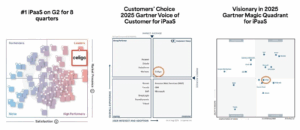
Customers consistently recognize Celigo:
- Ranked the #1 iPaaS on g2 for 8 consecutive quarters and
- Only vendor to be named as the 2025 Gartner® Peer Insights™ Customers’ Choice for iPaaS
As integration needs have shifted, so have IT leaders’ expectations
Organizations of all sizes choose Celigo over Boomi and MuleSoft for a better balance of power and accessibility at a predictable cost. Instead of forcing teams to choose between heavyweight platforms or brittle point tools, Celigo gives IT and business technologists a way to design, run, and govern complex integrations without unnecessary overhead.
Here’s what Celigo customers consistently value:
Celigo handles complex, powerful integrations
Buyers want to know if Celigo can handle real-world complexity. The answer is yes: behind the intuitive UI is an architecture built for complex, heavy workflows and multi-step, cross-system business processes.
- Developer tools like JavaScript hooks, JSON/XML support, custom scripting, reusable modules, and API access for complex workflows.
- Instance-wide data routing, which enables one flow to trigger or reference another flow based on data or logic, enables complex, multi-step business processes without creating a single point of failure.
- High-volume performance with a 100% multi-tenant, cloud-native AWS architecture that auto-parallelizes at runtime, managing concurrency and rate limits even for billion-record workloads.
Boomi and MuleSoft both scale, but with much more complexity and longer time-to-value. For instance,
- Boomi turns even small fixes into “mini release cycles” with retesting and redeployment across environments.
- MuleSoft adds complexity with its 3-layer API design, the need to learn DataWeave for even basic mappings.
What this means for you: With Celigo, you get a platform that can handle enterprise-grade complexity without the excessive overhead.
Celigo enables business users with IT oversight
IT leaders want to stay in control without turning every small change into an IT project or hiring niche specialists. They need an iPaaS that’s accessible enough for business teams to build with, while IT maintains governance and guardrails.
Celigo is designed for exactly that balance:
- Intuitive low-code UI and AI-assisted workflows (AI CoPilot, AI code assistant, mapping/code generation aids) help new users start building in days.
- Reusability, 1000+ prebuilt connectors and templates that provide 70–90% best practices out of the box, reduces manual setup, and provide a proven baseline to start from.
- Advanced RBACs IT can use to set clear boundaries around who can build, edit, and monitor workflows without slowing progress.
MuleSoft needs a team of trained developers across DevOps, IT, and infrastructure. Boomi, while simpler, still requires multiple dedicated specialized FTEs. Neither is suitable for business teams, and without specialists, you risk inefficient integration and technical debt.
“The technical floor of Boomi is way higher than what we’d like it to be. We’d like to hand this over to SalesOps, so they are able to go in and train on how to manage the smaller things. We can help from an IT standpoint on the more technical things. But with Boomi, they can’t do anything. And I don’t want to be the main person doing this all the time.” – Information Technology Manager, $300M home automation systems company
What this means for you: With Celigo, business teams move faster, IT retains control, and you avoid the overhead of routing every integration change, every new build through IT.
Celigo has autonomous, AI-powered error resolution built in
Most integration platforms stop innovating at the build phase. Celigo goes further by making error handling and resolution a core part of the platform, not an afterthought.
With Celigo you get:
- Centralized, built-in exception handling where every error is automatically caught, categorized, and logged.
- 95% of common API errors are automatically resolved, keeping critical workflows operational without human intervention.
- Errors surface with clear descriptions that business users can understand, modify data, and retry directly from the interface with visibility and auditability for IT.
- Route errors to appropriate team members with full audit trails.
- Real-time dashboards highlight trends and streamline triage for both IT and business users.
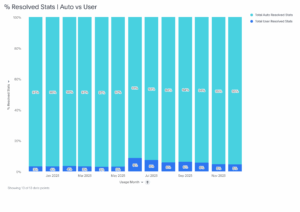
While Boomi and MuleSoft both provide error-handling capabilities, teams often have to design and maintain much of the framework themselves—checkpoints, custom retry logic, alerting, and process-level monitoring. That usually means more configuration and code, and if those controls aren’t implemented consistently across integrations, issues can still slip through and go unnoticed until they impact the business.
What this means for you: Business users can manage day-to-day integrations and escalate only the issues that truly require expert IT attention. The result is self-healing integrations and teams focused on meaningful work.
Celigo offers a lower total cost of ownership
Celigo’s predictable pricing model, combined with intuitive platform design, works together to keep both effort and total cost of ownership lower over time.
- Predictable pricing model based on endpoints and flows; you get what you see. No spikes or overages
- With intuitive UI, OOTB templates, and built-in error handling, customers report 70% less build effort and up to 50% lower ongoing maintenance hours
- Avoid hiring full-time integration specialists, since the platform can be used by both IT and business users, with minimal training.
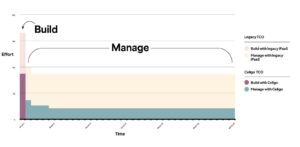
With MuleSoft and Boomi, consumption-based pricing is unpredictable, often leading to overages.
Additionally, both require higher build effort, ongoing break/fix cycles, and trained specialists. It all adds up to a higher total cost of ownership.
What this means for you: Celigo is a platform that scales without hidden fees, doesn’t require a growing integration team, and delivers predictable TCO your CFO will actually like.
One fully agnostic platform for all integration needs
Apart from the big differentiators above, buyers also appreciate that Celigo is a single, agnostic platform for all of their integration needs.
Celigo isn’t tied to any one ecosystem.
The platform is endpoint-agnostic and supports a full spectrum of integration and automation requirements in one unified experience — from application and data integration to B2B/EDI, API management, and emerging agentic/AI-driven workflows.
By contrast:
- MuleSoft is part of the Salesforce portfolio and is often evaluated primarily in Salesforce-centric strategies. Its positioning, packaging, and roadmap are closely aligned with the broader Salesforce ecosystem, which can be a strength if you’re all-in on Salesforce, but less flexible if you want an ecosystem-neutral integration layer.
- Boomi offers multiple integration-related capabilities across different modules and products. While this covers a range of patterns, customers often experience them as separate components that require additional configuration and licensing, rather than a single, cohesive platform for all integration scenarios.
With Celigo, IT leaders get one platform, one control plane, and one governance model across app integration, data integration, B2B, APIs, and automation, without being locked into a specific SaaS or infrastructure ecosystem.

Customer-centric, believes in long-term partnerships
Celigo is built around long-term customer success, not one-off deals. Customers of all sizes get access to:
- Dedicated account and success teams to help align the platform with evolving business goals.
- Guided onboarding and enablement through specialists plus free resources like Celigo University and Builders Hub.
- Ongoing support options such as Liftoff programs, Office Hours, and hands-on workshops to help teams ramp quickly, optimize integrations, and adopt new use cases over time.
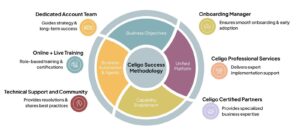
Unlike Boomi and MuleSoft, customers consistently highlight Celigo’s deeper, more hands-on guidance.
Here’s what customers have often said about their support:
“It’s only been a couple of weeks since we began onboarding with Boomi. It hasn’t been the best. But we did decline paying them to walk us through all of this. They said, ‘If you have questions, let us know and we’ll get back to you quickly.’ Their quickly is just not as quickly as we had hoped.” Cloud Solution Architect at a construction management company ($ 300M ARR)
“[MuleSoft] support might call you back in 15 minutes, but they won’t touch your server. They don’t know anything about what you’re doing. They’re just blindly asking you to click on things to try to figure out what’s wrong. They’re really expecting you to be staffed for it. I don’t have the bandwidth to learn it, nor do I have the budget to hire for it.” – Senior Director, Information Technology at a fine wine & spirits company ($1.6B ARR)
Celigo Use Case: AR Inquiry Response AI Agent
In the following example, Celigo automates responses to common Accounts Receivable (AR) inquiries with an agentic flow. Celigo’s team noted that 30-40% of AR inquiries fit into five boilerplate queries, presenting a clear opportunity for automation.
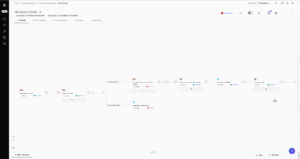
How the flow works: Uses AI to classify emails and draft responses to common AR inquiries.
- Retrieves incoming AR emails from Gmail.
- Uses OpenAI to extract customer details and classify intent (invoice request, account statement, banking details, credit memo, contact update).
- Routes each inquiry to the correct workflow branch based on the AI-generated category.
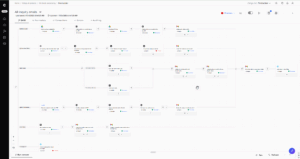
Celigo’s iPaaS uses the category to conditionally select a branch and execute the exact data retrieval and integration sequence required, such as:
- Downloading banking details from Google Drive
- Generating customer statements through NetSuite Restlets
- Updating contact or billing details in NetSuite
- Prepares a drafted Gmail response for finance review, keeping a human in the loop
- Responses are built dynamically, with or without attachments, depending on context and available data.
Business impact:
- Replaces hours of manual triage and coordination with a structured, intelligent process that ensures every AR inquiry is addressed accurately and promptly.
- Gains a fully automated response pipeline that shortens resolution times, reduces manual errors, and guarantees consistent customer communication.
- Handles common requests — from W-9s to overdue invoices to account statements — through a responsive, self-correcting workflow that frees finance teams to focus on higher-value work rather than inbox management.
In comparison to Boomi and MuleSoft:
- You need more hours to design integration and exception handling logic
- You need significant custom development hours or hire specialists to build integrations
- You will have to spend double the time to maintain and monitor these ongoing integrations
- Moreover, as you scale, you might run into overages.
- While both of them can most probably achieve the use case, it’s the approach that makes all the difference
Migration from Boomi or MuleSoft to Celigo
For teams, moving from Boomi or MuleSoft to Celigo isn’t just a migration but a reset in how teams operate. Fortunately, switching doesn’t have to be disruptive.
Customers have followed this proven migration path:
- Inventory flows and endpoints → Classify by risk and volume
- Pilot a high-impact flow (e.g., order sync) → Validate Celigo’s error handling, MTTR, and SLA alignment
- Run in parallel → Use alerting to compare MTTR, data quality, and operational overhead side-by-side
- Train teams → Cover retry, assignment, and resolution workflows; finalize operational runbooks
- Cut over → Decommission legacy connectors and flows with confidence.
“You know, we originally had planned to renew with Boomi in the middle of December and we had a plan to kind of keep both because we didn’t think we would get everything over but we did not need to renew. – VP of Enterprise Technology, Electrical Manufaturing company.
Within six months, this customer went live with 22 endpoints and 92 flows, including EDI (5 TPs), MS F&O, Salesforce, 3PL integrations, bank integrations with PGP encryption, and more.
Celigo: A Better Alternative to Boomi and MuleSoft
If you need deep API governance, MuleSoft might be the right fit. If you’re focused on legacy, hybrid integrations, Boomi could work.
But if you’re looking for an agnostic integration platform that delivers power, accessibility, and predictable cost, Celigo is the best choice.
→ Book your demo to see how Celigo solves for your use case.