Best automation platforms for 2026: From automation to orchestration – top solutions


Automation has become the backbone of business efficiency, but in 2026, it’s about more than just saving time. The new generation of automation platforms are evolving from isolated task automation to end-to-end orchestration, where systems, people, and data operate in sync.
As the automation landscape diversifies, five platforms stand out for their distinct strengths: Celigo leads in unifying data and workflow automation across both business and IT teams, while Workato offers task-based workflow capabilities. Boomi focuses on legacy platform integration, and Zapier enables SMBs with no-code workflows.
Together, these tools illustrate how the market is evolving from isolated task automation to intelligent, scalable orchestration.
For operations and IT leaders, the right platform can mean the difference between fragmented workflows and a seamlessly connected enterprise.
This guide explores the best automation platforms for 2026, how they’re reshaping digital transformation, and what to look for as automation matures into intelligent orchestration.
What is an automation platform?
An automation platform is software that connects systems, orchestrates workflows, and automates processes across departments. Instead of relying on custom scripts or manual data entry, automation platforms use visual builders, prebuilt connectors, and APIs to unify business operations.
While some platforms specialize in business process automation, such as marketing or HR, others focus on central IT, ensuring reliability and control over complex system architectures and mission-critical processes.
Operations leaders use automation software to streamline processes, reduce errors, and drive measurable ROI. IT and integration architects rely on these platforms to manage data flow, enforce governance, and maintain performance across systems.
Celigo’s Intelligent Automation Platform bridges these two worlds. By combining low-code workflow design with enterprise-grade governance, Celigo enables federated access to automation, where business users and technical teams can build and manage the automations they know best, all under the right guardrails that put IT’s mind at ease.
→ Explore Celigo’s Intelligent Automation Platform.
Why businesses are turning to automation software in 2026
Automation adoption isn’t slowing down; in fact, it’s accelerating. From startups to global enterprises, organizations are investing in platforms that combine flexibility with control.
Here’s why:
Greater efficiency and productivity
Automation eliminates manual steps and the need to write custom integration scripts, freeing teams to focus on higher-impact work. Whether it’s syncing CRM data, routing tickets, or automating financial close processes, automation programs help reduce cycle times and increase throughput without additional headcount.
Enhanced accuracy and reduced errors
Manual workflows are prone to inconsistencies. Automation platforms ensure data reliability by enforcing rules and validations across connected systems, improving reporting accuracy and compliance.
Operational scalability
Connecting disconnected systems with unified orchestration helps organizations scale efficiently. Instead of building custom scripts or burdening people with manual data entry, automation platforms act as a central hub, reducing integration costs and operational overhead while improving data quality and efficiency.
For operations leaders, that means fast time-to-value with measurable ROI tied to revenue growth and cost reduction. For IT teams, it means less time maintaining custom scripts and better control over data pipelines, workflow monitoring, and scalability without adding IT headcount.
Key features of the best automation platforms
As automation evolves, certain capabilities have become essential for success.
The best automation platforms in 2026 share these defining features.
1. Low-code/no-code design
The days of automation requiring advanced coding are over. The leading platforms empower non-technical users to create, test, and deploy automations through visual, drag-and-drop interfaces, while giving IT teams the ability to manage and monitor those workflows centrally.
2. Cross-system integration capabilities
Modern automation requires seamless integration between CRMs, ERPs, HR systems, analytics tools, and marketing stacks. The best platforms offer prebuilt connectors, universal REST/HTTP API compatibility, and event-driven workflows that make it simple to orchestrate data flow across your ecosystem.
3. Data governance and monitoring
As automation scales, so does the need for control. Enterprise-grade platforms provide governance tools, audit trails, and error monitoring that ensure every automation runs securely, with visibility across every workflow.
For operations leaders, these features enable safe, independent automation outside of IT by business technologists. For IT architects, they provide assurance around SLAs, workflow performance, data security, and compliance.
4. One platform for any type of automation
A modern automation platform should handle all workflows in one place — moving data between apps, connecting partners, managing APIs, and supporting AI-driven tasks. With a single, easy-to-use interface, IT and business teams can see issues, fix them fast, and avoid managing multiple integration tools. A flexible, scalable foundation keeps automations simple to build and manage without adding complexity for IT.
5. Supports deterministic to fully autonomous AI workflows
In the age of AI, automation platforms are the backbone that gives AI secure access to enterprise data, coordinates multiple agents, and ensures the oversight IT needs. The strongest platforms let teams combine clear, rule-based steps with AI-driven tasks, choosing the right level of autonomy for each workflow.
Just as importantly, they run all of these workflows together in one environment, making it easier to orchestrate and manage them across the business.
Top automation platforms to consider in 2026
With so many tools available, choosing the right platform depends on your business goals, technical maturity, and ecosystem needs. Below are some of the top contenders shaping the automation landscape in 2026.
1. Celigo Intelligent Automation Platform
Best for unified business and IT automation
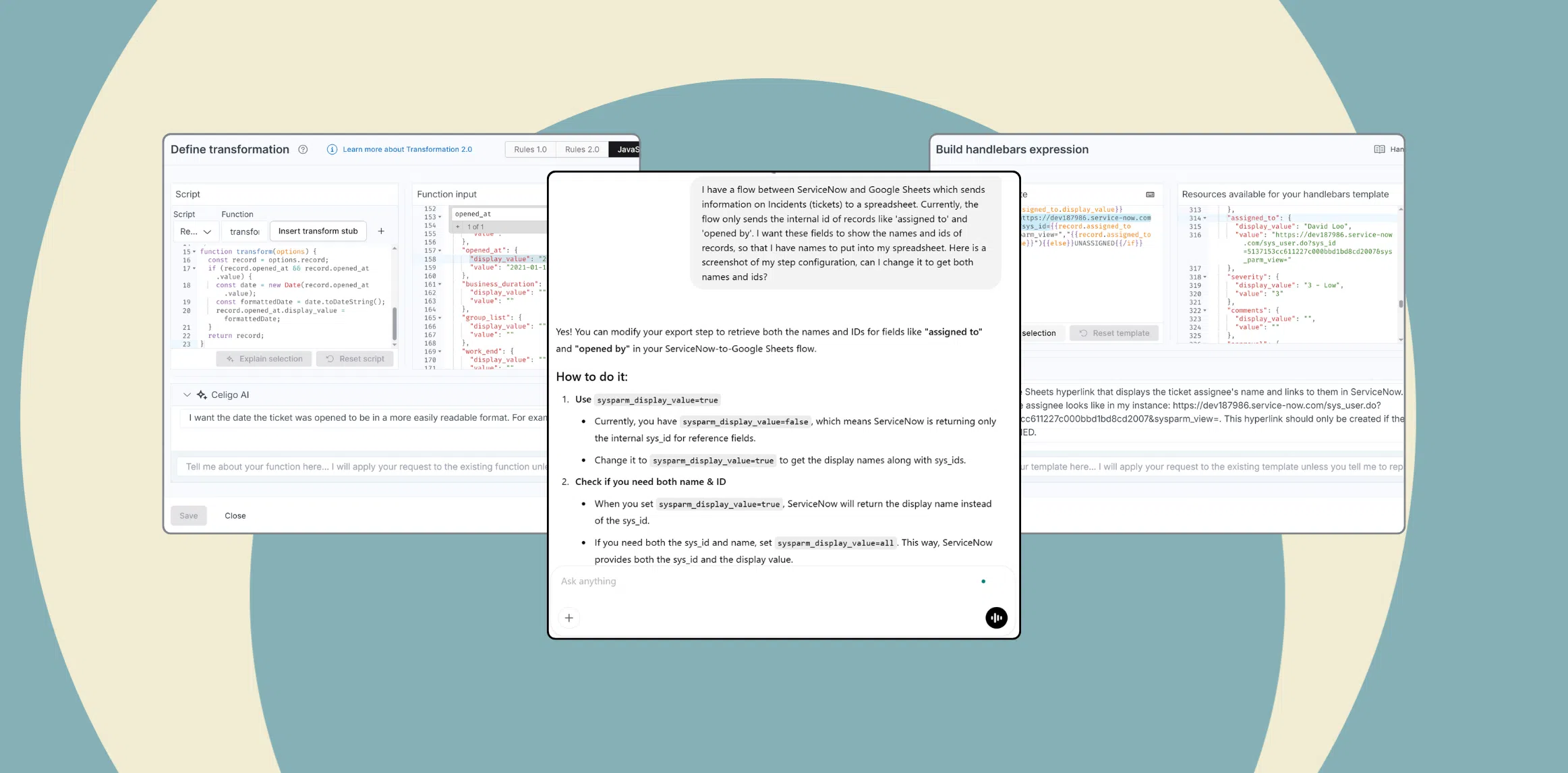
Celigo’s Intelligent Automation Platform brings building, operating, and scaling automation into one unified system. Technical teams get the power and speed they need, while business users can easily contribute using AI-assisted design and prebuilt components.
Once workflows are live, Celigo keeps them running reliably with AI-driven error resolution and tools that let business users handle everyday updates while IT maintains full oversight.
The platform supports every kind of automation from SaaS and on-prem system integrations, data pipelines, B2B/EDI processes, APIs, and autonomous agents, all orchestrated in one place without the complexity of multiple tools.
Celigo’s Intelligent Automation Platform
It’s particularly strong for organizations aiming to connect disparate systems and mission-critical processes across Salesforce, NetSuite, Microsoft Dynamics 365, Workday, and ServiceNow, among others.
In short, Celigo helps organizations build faster, run smarter, and automate more, creating a modern foundation for automation and AI across the enterprise.
2. Workato
Best for task-based automation
Workato remains a strong choice for task-based automation, offering recipe-based workflow design and an extensive community-supported app ecosystem. It’s well-suited for organizations seeking prebuilt, one-off automations across marketing, finance, HR, and operations, where data volumes are relatively low
3. Boomi
Best for legacy integration
Boomi excels in environments with older infrastructure and deeply embedded legacy systems. It’s well-suited for IT teams that need robust orchestration, strict governance, and mature integration patterns. However, it typically requires deeper technical expertise to deploy and maintain, as its core product has been stitched together via acquisition. This increases long-term operational costs and slows down agility.
4. Zapier
Best for SMB and no-code automation
Zapier continues to dominate in small business and startup environments. Its no-code interface and vast app library make it easy to automate basic workflows, though it’s less suited for enterprise governance or complex integrations.
5. Mulesoft
Best for large API-led automations
Mulesoft is known for its API-led automations driven by IT teams to support complex legacy infrastructures, where IT wants to expose curated information (often from on-premise systems) for the rest of the business to use. This method works well for companies with a large IT team to manage the multiple API layers or a partner that assists with a lengthy implementation timeline.
How to choose the right automation platform
With options spanning no-code tools to enterprise integration suites, selecting the right automation platform starts with clarity on your goals.
1. Define your automation objectives
Identify what success looks like. Are you automating workflows to improve efficiency, strengthen compliance, or gain visibility? Clear goals help determine which platform capabilities matter most, whether low-code tools for speed or governance features for control.
2. Evaluate integration and scalability
Ensure the platform supports your current and future ecosystem. Look for flexible APIs, prebuilt connectors, and scalability that supports multi-departmental growth.
3. Pilot, measure, and optimize
Start small—pilot a few automations, measure performance, and refine. The best automation programs evolve iteratively, expanding across departments once success is proven.
Celigo supports this journey through reusable workflow templates, built-in analytics, and a modular architecture that scales as automation maturity grows.
The future: Unified automation for the AI era
In 2026, the conversation moves beyond automating individual processes to coordinating entire workflows across systems, data, people, and now AI. The organizations that thrive will be the ones that can build quickly, run reliably, and adapt fast as their needs evolve.
Whether you’re reducing operational friction or ensuring integrations stay secure and scalable, the platform you choose will determine how much agility you can unlock.
Celigo’s Intelligent Automation Platform reflects this new era. A single environment where technical teams and business users can build together, where workflows and AI agents run reliably at scale, and where every part of the enterprise can move faster without adding complexity. It’s the direction automation is headed, and it’s how IT leaders will prepare for what comes next.
Next steps
See how Celigo’s Intelligent Automation Platform helps organizations bridge AI Agents, automation, and orchestration by unifying workflows, scaling integrations, and accelerating transformation.
Integration insights
Expand your knowledge on all things integration and automation. Discover expert guidance, tips, and best practices with these resources.